
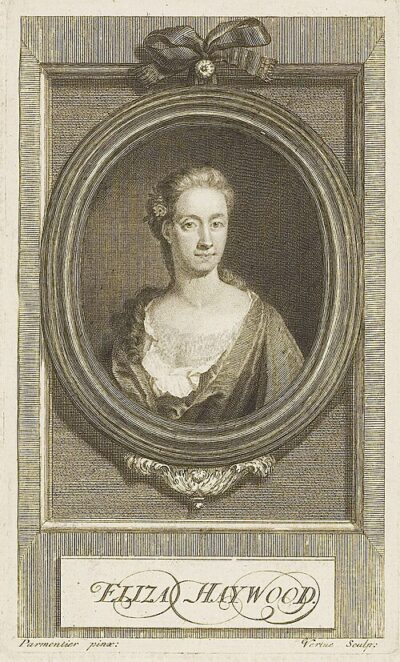
Eliza Haywood
Eliza Haywood was a British actor and writer (1693-1756), editor. Born 1693, in Shropshire. Died February 25, 1756, in London.
Facts
14 facts · 2 confirmed by two sources · 5 cited · 7 from one source
What’s different
- Died: we show February 25, 1756 (Confirmed). Wikidata also lists 1757
Where this comes from
Papalocal keeps its own record. It started from these sources; what each one said is kept here as it was copied, so a change on their side never changes this page by itself. Tap one to read its version.
What Wikidata says · copied November 18, 2026 · revision 2557866851
- Described as
- British actor and writer (1693-1756), editor
- Other names
- Eliza Fowler, Eliza Heywood
- Born
- 1693 · 7 references
- Died
- February 25, 1756 · 6 references; 1757 · 1 reference
- Born in
- Shropshire · 1 reference
- Died in
- London · 1 reference
- Citizen of
- Kingdom of Great Britain
- Occupation
- novelist; poet; writer · 2 references; playwright; essayist; actor · 2 references; stage actor · 1 reference; editor · 1 reference
- Field
- essay
- Wikipedias with a page
- 21
Wikidata item Q1559438 (wikidata.org/wiki/Q1559438), public domain (CC0). Copied November 18, 2026.
What Wikipedia says · copied November 18, 2026 · revision 1382816756
Eliza Haywood (née Elizabeth Fowler; c. 1693 – 25 February 1756) was an English writer, actress and publisher. Described as "prolific even by the standards of a prolific age", Haywood wrote and published over 70 works in her lifetime, including fiction, drama, translations, poetry, conduct literature and periodicals. Haywood today is studied primarily as one of the 18th-century founders of the novel in English. She is especially famous for her novel Love in Excess (1719–20).
- Born, in its opening lines
- c. 1693
- Died, in its opening lines
- February 25, 1756
From the Wikipedia article “Eliza Haywood” (en.wikipedia.org/wiki/Eliza_Haywood), by its contributors, under CC BY-SA 4.0 (creativecommons.org/licenses/by-sa/4.0/). Copied November 18, 2026; not changed.
Confirmed Two sources agree. Cited One source, and it names where it got it. One source One source, without a reference of its own. Sources disagree The sources disagree. We show the best-supported value and keep theirs below.
