
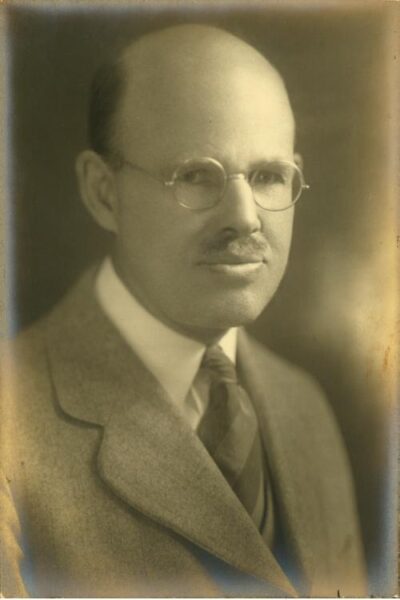
Ellsworth Huntington
Ellsworth Huntington was an American geographer. Born September 16, 1876, in Galesburg. Died October 17, 1947, in New Haven. Positions held include chairperson (1917). Educated at Harvard University and Yale University. Awards include honorary doctor of the Clark University.
Facts
18 facts · 2 confirmed by two sources · 7 cited · 9 from one source
Where this comes from
Papalocal keeps its own record. It started from these sources; what each one said is kept here as it was copied, so a change on their side never changes this page by itself. Tap one to read its version.
What Wikidata says · copied November 16, 2026 · revision 2568625632
- Described as
- American geographer (1876-1947)
- Born
- September 16, 1876 · 5 references
- Died
- October 17, 1947 · 4 references
- Born in
- Galesburg
- Died in
- New Haven · 1 reference
- Citizen of
- United States
- Occupation
- geopolitical analyst; geographer · 1 reference; economist; university teacher
- Positions held
- chairperson (1917) · 1 reference
- Worked for
- Yale University
- Education
- Harvard University (–1902) · 1 reference; Yale University (–1909) · 2 references; Beloit College (–1897) · 1 reference
- Member of
- American Academy of Arts and Sciences
- Awards
- honorary doctor of the Clark University (1946) · 1 reference
- Father
- Henry Strong Huntington
- Siblings
- Henry S. Huntington
- Wikipedias with a page
- 22
Wikidata item Q1332601 (wikidata.org/wiki/Q1332601), public domain (CC0). Copied November 16, 2026.
What Wikipedia says · copied November 16, 2026 · revision 1371990561
Ellsworth Huntington (September 16, 1876 – October 17, 1947) was a professor of geography at Yale University during the early 20th century, known for his studies on environmental determinism/climatic determinism, economic growth, and economic geography. He served as president of the Ecological Society of America in 1917, the Association of American Geographers in 1923 and president of the board of directors of the American Eugenics Society from 1934 to 1938.
He taught at Euphrates College, Turkey (1897–1901); accompanied the Pumpelly (1903) and Barrett (1905–1906) expeditions to central Asia; and wrote of his Asian experiences in Explorations in Turkestan (1905) and The Pulse of Asia (1907). He taught geography at Yale (1907–1915) and from 1917 was a research associate there, devoting his time chiefly to climatic and anthropogeographic studies. He was the 1916 recipient of the Elisha Kent Kane Gold Medal from the Geographical Society of Philadelphia.
In 1909, Huntington led the Yale Expedition to Palestine. It was his mission to determine "step by step the process by which geologic structure, topographic form, and the present and past nature of the climate have shaped man's progress, moulded his history; and thus played an incalculable part in the development of a system of thought which could scarcely have arisen under any other physical circumstances."
During the Progressive Era, Huntington expressed concern about immigration and the race mixing. He claimed that liberal immigration policy would lead to the "highest racial values" being "irrevocably swamped by those of lower calibre."
He was on the original standing committee of the Foundation for the Study of Cycles from 1941.
- Born, in its opening lines
- September 16, 1876
- Died, in its opening lines
- October 17, 1947
From the Wikipedia article “Ellsworth Huntington” (en.wikipedia.org/wiki/Ellsworth_Huntington), by its contributors, under CC BY-SA 4.0 (creativecommons.org/licenses/by-sa/4.0/). Copied November 16, 2026; not changed.
Confirmed Two sources agree. Cited One source, and it names where it got it. One source One source, without a reference of its own. Sources disagree The sources disagree. We show the best-supported value and keep theirs below.
