
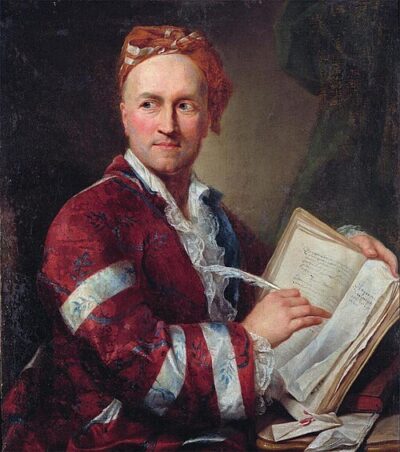
Emerich de Vattel
Emerich de Vattel was a jurist from the Principality of Neuchâtel. Born April 25, 1714, in Couvet. Died December 28, 1767, in Neuchâtel. Educated at University of Basel.
Facts
12 facts · 2 confirmed by two sources · 3 cited · 7 from one source
Where this comes from
Papalocal keeps its own record. It started from these sources; what each one said is kept here as it was copied, so a change on their side never changes this page by itself. Tap one to read its version.
What Wikidata says · copied November 17, 2026 · revision 2568877343
- Described as
- jurist from the Principality of Neuchâtel
- Other names
- Emer de Vattel, Emeric de Vattel
- Born
- April 25, 1714 · 6 references
- Died
- December 28, 1767 · 4 references
- Born in
- Couvet · 1 reference
- Died in
- Neuchâtel · 1 reference
- Citizen of
- Principality of Neuchâtel · 2 references
- Occupation
- philosopher; jurist · 2 references; diplomat; writer · 1 reference
- Education
- University of Basel · 1 reference
- Field
- public international law · 2 references
- Religion
- reformed · 1 reference
- Wikipedias with a page
- 25
Wikidata item Q122386 (wikidata.org/wiki/Q122386), public domain (CC0). Copied November 17, 2026.
What Wikipedia says · copied November 17, 2026 · revision 1384964552
Emmerich de Vattel (French pronunciation: [vatɛl] 25 April 1714 – 28 December 1767) was a philosopher, diplomat, and jurist.
Vattel's work profoundly influenced the development of international law. He is most famous for his 1758 work The Law of Nations. This work was his claim to fame and won him enough prestige to be appointed as a councilor to the court of Frederick Augustus II of Saxony. Vattel combined naturalist legal reasoning and positivist legal reasoning.
- Born, in its opening lines
- April 25, 1714
- Died, in its opening lines
- December 28, 1767
From the Wikipedia article “Emer de Vattel” (en.wikipedia.org/wiki/Emer_de_Vattel), by its contributors, under CC BY-SA 4.0 (creativecommons.org/licenses/by-sa/4.0/). Copied November 17, 2026; not changed.
Confirmed Two sources agree. Cited One source, and it names where it got it. One source One source, without a reference of its own. Sources disagree The sources disagree. We show the best-supported value and keep theirs below.
