
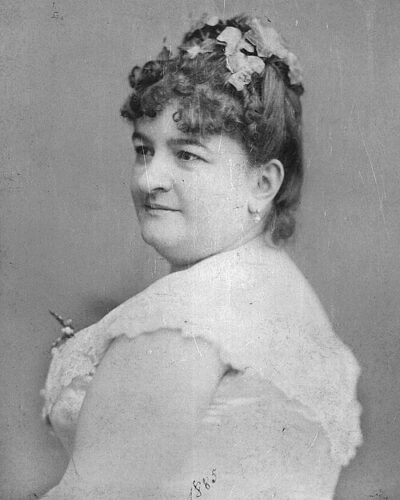
Emilia Pardo Bazán
Emilia Pardo Bazán was a Spanish author, editor. Born September 16, 1851, in A Coruña. Died May 12, 1921, in Madrid. Known for The House of Ulloa and La cuestión palpitante.
Facts
26 facts · 2 confirmed by two sources · 11 cited · 13 from one source
Where this comes from
Papalocal keeps its own record. It started from these sources; what each one said is kept here as it was copied, so a change on their side never changes this page by itself. Tap one to read its version.
What Wikidata says · copied November 16, 2026 · revision 2569708050
- Described as
- Spanish author, editor (1851–1922)
- Other names
- Emilia Pardo, Condesa de Basán, Condesa de Pardo Bazán, Emilia, Condesa dBazán, Emilia, Condesa de Pardo Basán, Emilia Pardo, Condesa de Bazán, Condesa de Bazán, Condesa de Pardo Bazan, Condesa de Bazan, valentina Pardo Bazan, Emilia Pardo Bazan, Emilia, Condesa de Pardo Bazán, La gordita
- Born
- September 16, 1851 · 11 references
- Died
- May 12, 1921 · 10 references
- Born in
- A Coruña · 3 references
- Died in
- Madrid · 3 references
- Buried in
- Sacramental de San Lorenzo y San José cemetery (1921–1936); Basilica of the Immaculate Conception (1936–) · 1 reference
- Cause of death
- influenza
- Name at birth
- Emilia Antonia Socorro Josefa Amalia Vicenta Eufemia Pardo Bazán y de la Rúa-Figueroa
- Citizen of
- Spain
- Occupation
- essayist; literary critic; novelist · 1 reference; journalist; salonnière; writer · 2 references; poet · 1 reference; editor · 1 reference
- Member of
- Royal Galician Academy (1905–1921) · 1 reference
- Known for
- The House of Ulloa; La cuestión palpitante
- Field
- essay
- Spouse
- José Quiroga y Pérez de Deza (1868–1912) · 1 reference
- Children
- Jaime Quiroga y Pardo Bazán · 1 reference; María de las Nieves Quiroga y Pardo Bazán · 1 reference; María del Carmen Quiroga y Pardo Bazán · 1 reference
- Father
- José Pardo Bazán
- Wikipedias with a page
- 42
Wikidata item Q275929 (wikidata.org/wiki/Q275929), public domain (CC0). Copied November 16, 2026.
What Wikipedia says · copied November 16, 2026 · revision 1372192055
Emilia Pardo Bazán y de la Rúa-Figueroa, Countess of Pardo Bazán (Spanish pronunciation: [eˈmilja ˈpaɾðo βaˈθan]; 16 September 1851 – 12 May 1921) was a Spanish novelist, journalist, literary critic, poet, playwright, translator, editor and professor.
Her naturalism and descriptions of reality, as well as her feminist ideas embedded in her work, made her one of the most influential and best-known female writers of her era. Her ideas about women's rights in education also made her a prominent feminist figure. She also addressed the history of Spain and its influence in contemporaneous politics, coining the term of the Spanish Black Legend.
- Born, in its opening lines
- September 16, 1851
- Died, in its opening lines
- May 12, 1921
From the Wikipedia article “Emilia Pardo Bazán” (en.wikipedia.org/wiki/Emilia_Pardo_Bazán), by its contributors, under CC BY-SA 4.0 (creativecommons.org/licenses/by-sa/4.0/). Copied November 16, 2026; not changed.
Confirmed Two sources agree. Cited One source, and it names where it got it. One source One source, without a reference of its own. Sources disagree The sources disagree. We show the best-supported value and keep theirs below.
