
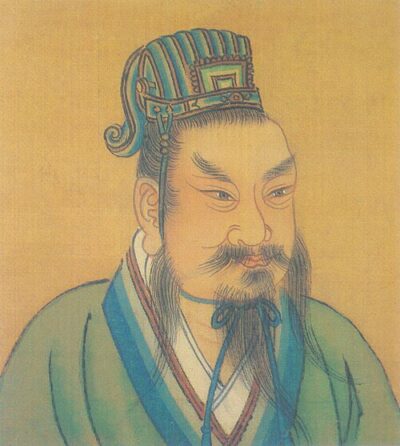
Emperor Gao of Southern Qi was a Southern Qi emperor. Born 427. Died April 11, 482, in Jiankang. Positions held include Emperor of China (479–482).
Facts
22 facts · 2 confirmed by two sources · 3 cited · 17 from one source
Where this comes from
Papalocal keeps its own record. It started from these sources; what each one said is kept here as it was copied, so a change on their side never changes this page by itself. Tap one to read its version.
What Wikidata says · copied November 18, 2026 · revision 2521277910
- Described as
- Southern Qi emperor
- Other names
- Xiao Daocheng, Tai Zu, Gao Di, Shaobo
- Born
- 427
- Died
- April 11, 482
- Died in
- Jiankang
- Citizen of
- Southern Qi · 1 reference
- Occupation
- calligrapher
- Positions held
- Emperor of China (479–482)
- Spouse
- Gaozhao
- Children
- Emperor Wu of Southern Qi · 1 reference; Xiao Ye; Xiao Shuo; Xiao Keng; Xiao Rui; Xiao Qiang; Xiao Ni; Xiao Ying; Xiao Huang; Xiao Hao; Xiao Jun; Xiao Xuan · 1 reference
- Father
- Xiao Chengzhi · 1 reference
- Mother
- Chen Daozheng
- Siblings
- Xiao Daosheng
- Wikipedias with a page
- 22
Wikidata item Q1194981 (wikidata.org/wiki/Q1194981), public domain (CC0). Copied November 18, 2026.
What Wikipedia says · copied November 18, 2026 · revision 1386316963
Emperor Gao of Southern Qi ((南)齊高帝; 427– 11 April 482), personal name Xiao Daocheng (蕭道成), courtesy name Shaobo (紹伯), childhood name Doujiang (鬥將), was the founding emperor of the Southern Qi dynasty of China. He served as a general under the preceding dynasty Liu Song's Emperor Ming and Emperor Houfei. In 477, fearful that the young, cruel Emperor Houfei would kill him, he assassinated Emperor Houfei and seized power, eventually taking the throne in 479 to start Southern Qi.
- Born, in its opening lines
- 427
- Died, in its opening lines
- April 11, 482
From the Wikipedia article “Emperor Gao of Southern Qi” (en.wikipedia.org/wiki/Emperor_Gao_of_Southern_Qi), by its contributors, under CC BY-SA 4.0 (creativecommons.org/licenses/by-sa/4.0/). Copied November 18, 2026; not changed.
Confirmed Two sources agree. Cited One source, and it names where it got it. One source One source, without a reference of its own. Sources disagree The sources disagree. We show the best-supported value and keep theirs below.
