
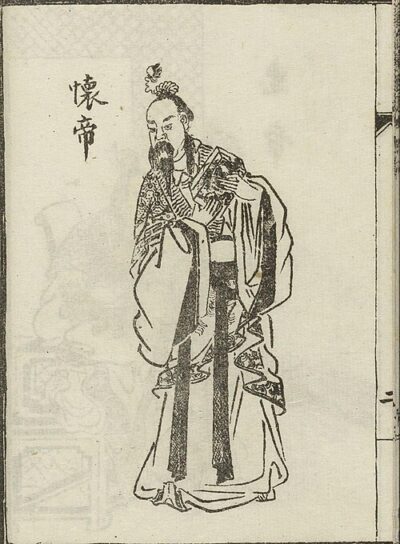
Emperor Huai of Jin was the 3rd emperor of the Jin Dynasty. Born 284, in Luoyang. Died March 14, 313. Positions held include Emperor of China (307–311).
Facts
22 facts · 2 confirmed by two sources · 2 cited · 18 from one source
Where this comes from
Papalocal keeps its own record. It started from these sources; what each one said is kept here as it was copied, so a change on their side never changes this page by itself. Tap one to read its version.
What Wikidata says · copied November 17, 2026 · revision 2569001941
- Described as
- 3rd emperor of the Jin Dynasty (265–420)
- Other names
- Sima Chi, Sima Zhi(2), Huai Di, Jin Huaidi, Fengdu
- Born
- 284
- Died
- March 14, 313
- Born in
- Luoyang
- Cause of death
- poison
- Citizen of
- China; Western Jin dynasty · 1 reference
- Occupation
- monarch
- Positions held
- Emperor of China (307–311)
- Spouse
- Empress Liang Lanbi; Liu Cong
- Father
- Emperor Wu of Jin · 1 reference
- Mother
- Wang Yuanji
- Siblings
- princess Xingyang; princess Yingchuan; elder princess Xingyang; princess Lingshou; princess Fanchang; princess Wannian; princess Xiangcheng; princess Yangping; Princess Changshan; princess Pingyang
- Wikipedias with a page
- 24
Wikidata item Q7361 (wikidata.org/wiki/Q7361), public domain (CC0). Copied November 17, 2026.
What Wikipedia says · copied November 17, 2026 · revision 1386316671
Emperor Huai of Jin (simplified Chinese: 晋怀帝; traditional Chinese: 晉懷帝; pinyin: Jìn Huái Dì; Wade–Giles: Chin Huai-ti; 284 – March 14, 313), personal name Sima Chi (司馬熾), courtesy name Fengdu (豐度), was an emperor of the Jin dynasty.
Emperor Huai was captured in July 311 (Disaster of Yongjia) and later executed in 313 under the order of Liu Cong, ruler of the Xiongnu state of Han-Zhao.
- Born, in its opening lines
- 284
- Died, in its opening lines
- March 14, 313
From the Wikipedia article “Emperor Huai of Jin” (en.wikipedia.org/wiki/Emperor_Huai_of_Jin), by its contributors, under CC BY-SA 4.0 (creativecommons.org/licenses/by-sa/4.0/). Copied November 17, 2026; not changed.
Confirmed Two sources agree. Cited One source, and it names where it got it. One source One source, without a reference of its own. Sources disagree The sources disagree. We show the best-supported value and keep theirs below.
