
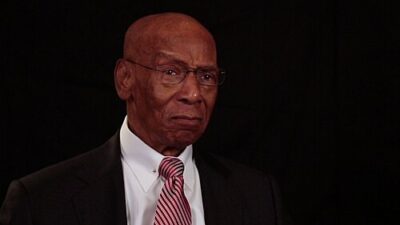
Ernie Banks
Ernie Banks was an American baseball player and coach. Born January 31, 1931, in Dallas. Died January 23, 2015, in Chicago. Teams include Chicago Cubs and Kansas City Monarchs. Educated at Booker T. Washington High School for the Performing and Visual Arts. Awards include Rawlings Gold Glove Award, Library of Congress Living Legend and Presidential Medal of Freedom.
Facts
18 facts · 2 confirmed by two sources · 7 cited · 9 from one source
Where this comes from
Papalocal keeps its own record. It started from these sources; what each one said is kept here as it was copied, so a change on their side never changes this page by itself. Tap one to read its version.
What Wikidata says · copied November 16, 2026 · revision 2530034956
- Described as
- American baseball player and coach
- Other names
- Ernest Banks, Mr. Cub, Mr. Sunshine
- Born
- January 31, 1931 · 3 references
- Died
- January 23, 2015 · 2 references
- Born in
- Dallas
- Died in
- Chicago · 1 reference
- Buried in
- Graceland Cemetery · 1 reference
- Cause of death
- myocardial infarction
- Citizen of
- United States
- Occupation
- baseball player · 1 reference
- Political party
- Republican Party
- Education
- Booker T. Washington High School for the Performing and Visual Arts
- Teams
- Chicago Cubs; Kansas City Monarchs · 1 reference
- Sport
- baseball · 1 reference
- Awards
- Rawlings Gold Glove Award; Library of Congress Living Legend (2009–) · 1 reference; Presidential Medal of Freedom (2013) · 1 reference; Major League Baseball Most Valuable Player Award (2 times) (1958, 1959) · 1 reference
- Military rank
- Private First Class · 1 reference
- Wikipedias with a page
- 22
Wikidata item Q3051017 (wikidata.org/wiki/Q3051017), public domain (CC0). Copied November 16, 2026.
What Wikipedia says · copied November 16, 2026 · revision 1379814152
Ernest Banks (January 31, 1931 – January 23, 2015), nicknamed "Mr. Cub" and "Mr. Sunshine", was an American professional baseball player who starred in Major League Baseball (MLB) as a shortstop and first baseman for the Chicago Cubs between 1953 and 1971. He was inducted into the National Baseball Hall of Fame in 1977 in his first year of eligibility, and was named to the Major League Baseball All-Century Team in 1999.
Banks is regarded as one of the greatest players of all time. He began playing professional baseball in 1950 with the Kansas City Monarchs in the Negro leagues. He served in the U.S. military for two years, played for the Monarchs again, and began his National League career in September 1953. The following year, Banks was the National League Rookie of the Year runner-up. Beginning in 1955, Banks was a National League (NL) All-Star for 11 seasons, playing in 13 of the 15 All-Star Games held during those years. Banks was the Cubs' main attraction in the late 1950s, the National League Most Valuable Player in 1958 and 1959, and the Cubs' first Gold Glove winner in 1960.
In 1962, Banks became a regular first baseman for the Cubs. Between 1967 and 1971, he was a player-coach. In 1969, through a Chicago Sun-Times fan poll, Cubs fans voted him the greatest Cub ever. In 1970, Banks hit his 500th career home run at Wrigley Field. He retired from playing in 1971, was a coach for the Cubs in 1972, and in 1982 was the team's first player to have his uniform number retired.
Banks was active in the Chicago community during and after his tenure with the Cubs. He founded a charitable organization, became the first black Ford Motor Company dealer in the United States, and made an unsuccessful bid for a local political office. In 2013, Banks was awarded the Presidential Medal of Freedom by Barack Obama for his contribution to sports.
- Born, in its opening lines
- January 31, 1931
- Died, in its opening lines
- January 23, 2015
From the Wikipedia article “Ernie Banks” (en.wikipedia.org/wiki/Ernie_Banks), by its contributors, under CC BY-SA 4.0 (creativecommons.org/licenses/by-sa/4.0/). Copied November 16, 2026; not changed.
Confirmed Two sources agree. Cited One source, and it names where it got it. One source One source, without a reference of its own. Sources disagree The sources disagree. We show the best-supported value and keep theirs below.
