
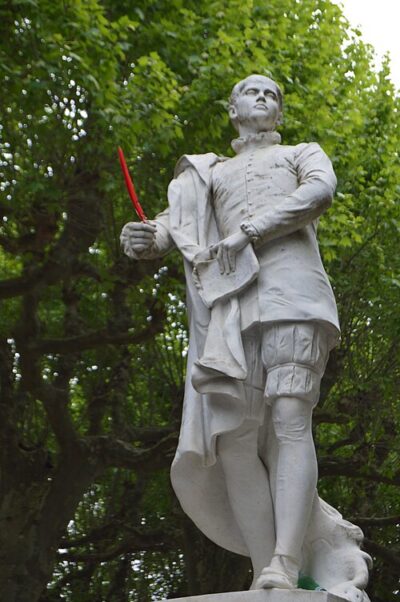
Étienne de La Boétie
Étienne de La Boétie was a French judge, writer and philosopher. Born November 1, 1530, in Sarlat-la-Canéda. Died August 18, 1563, in Le Taillan-Médoc. Positions held include judge. Known for Discourse on Voluntary Servitude. Educated at Old University of Orléans and University of Orléans.
Facts
21 facts · 2 confirmed by two sources · 7 cited · 12 from one source
Where this comes from
Papalocal keeps its own record. It started from these sources; what each one said is kept here as it was copied, so a change on their side never changes this page by itself. Tap one to read its version.
What Wikidata says · copied November 16, 2026 · revision 2568631373
- Described as
- French judge, writer and philosopher (1530–1563)
- Other names
- Étienne De La Boétie, Etienne de la boetie, Etienne De La Boetie, On Voluntary Servitude, Etienne de La Boetie, Étienne de la Boétie, Etienne de la Boetie, La Boétie, La Boetie, LA BOETIE, Étienne de La Boëtie
- Born
- November 1, 1530 · 1 reference
- Died
- August 18, 1563 · 1 reference
- Born in
- Sarlat-la-Canéda
- Died in
- Le Taillan-Médoc
- Citizen of
- France · 1 reference
- Occupation
- philosopher; judge; poet; moralist; writer · 3 references; politician · 1 reference
- Positions held
- judge
- Education
- Old University of Orléans; University of Orléans · 1 reference; College of Guienne
- Known for
- Discourse on Voluntary Servitude
- Field
- philosophy · 1 reference; justice and judicial activities · 1 reference; politics · 1 reference; literature · 1 reference
- Religion
- Catholic Church
- Wikipedias with a page
- 69
Wikidata item Q290227 (wikidata.org/wiki/Q290227), public domain (CC0). Copied November 16, 2026.
What Wikipedia says · copied November 16, 2026 · revision 1370244047
Étienne or Estienne de La Boétie (French: [etjɛn d(ə) la bɔesi] , also [bwati] or [bɔeti]; Occitan: Esteve de La Boetiá; 1 November 1530 – 18 August 1563) was a French magistrate, classicist, writer, poet and political theorist, best remembered for his relationship with essayist Michel de Montaigne. His early political treatise Discourse on Voluntary Servitude was posthumously adopted by the Huguenot movement and is sometimes seen as an early influence on modern anti-statist, utopian and civil disobedience thought.
- Born, in its opening lines
- November 1, 1530
- Died, in its opening lines
- August 18, 1563
From the Wikipedia article “Étienne de La Boétie” (en.wikipedia.org/wiki/Étienne_de_La_Boétie), by its contributors, under CC BY-SA 4.0 (creativecommons.org/licenses/by-sa/4.0/). Copied November 16, 2026; not changed.
Confirmed Two sources agree. Cited One source, and it names where it got it. One source One source, without a reference of its own. Sources disagree The sources disagree. We show the best-supported value and keep theirs below.
