
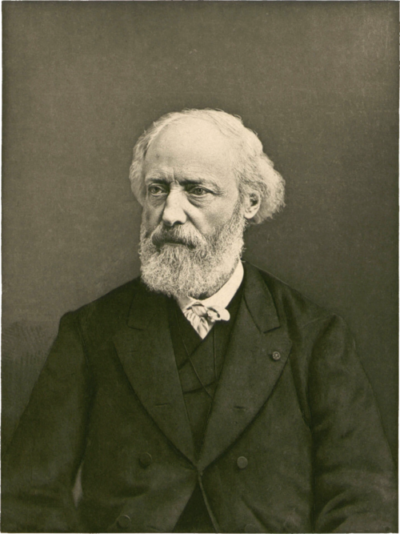
Eugène Viollet-le-Duc
Eugène Viollet-le-Duc was a French architect. Born January 27, 1814, in former 2nd arrondissement of Paris. Died September 17, 1879, in Lausanne. Positions held include municipal councillor of Paris and diocesan architect (1860–1874). Known for Abbadia Castle, Château de Montdardier and Château de la Flachère. Awards include Royal Gold Medal and Commander of the Legion of Honour.
Facts
31 facts · 2 confirmed by two sources · 10 cited · 19 from one source
Where this comes from
Papalocal keeps its own record. It started from these sources; what each one said is kept here as it was copied, so a change on their side never changes this page by itself. Tap one to read its version.
What Wikidata says · copied November 16, 2026 · revision 2564802378
- Described as
- French architect (1814-1879)
- Other names
- Eugène-Emmanuel Viollet-le- Duc, Eugene Emmanuel Viollet-le-Duc, Eugène-Emmanuel Viollet-le-Duc, Eugène-Emmanuel Viollet- Le-Duc, Eugène Emmanuel Viollet-Le- Duc, E. Viollet-le-Duc, Eugène Emmanuel Violle-le-Diuk, E. Violle-le-Di︠u︡k, Eugene Emmanuel Viollet-Le-Duc, Eugène-Emanuel Viollet-le-Duc, Eugene-Emmanuel Viollet-le- Duc, Eugene-Emmanuel Viollet-le-Duc
- Born
- January 27, 1814 · 9 references
- Died
- September 17, 1879 · 6 references
- Born in
- former 2nd arrondissement of Paris · 1 reference
- Died in
- Lausanne · 2 references
- Buried in
- Bois-de-Vaux Cemetery
- Name at birth
- Eugène Emmanuel Viollet Leduc · 1 reference
- Citizen of
- France · 1 reference
- Occupation
- architect · 4 references; writer · 1 reference; architectural drafter; art historian · 2 references; architectural historian; restorer · 1 reference; castellologist; preface author
- Positions held
- municipal councillor of Paris; diocesan architect (1860–1874)
- Worked for
- Beaux-Arts de Paris
- Member of
- Royal Academy of Arts; American Academy of Arts and Sciences
- Known for
- Abbadia Castle; Château de Montdardier; Château de la Flachère; Statue of Liberty
- Awards
- Royal Gold Medal (1864); Commander of the Legion of Honour · 1 reference
- Spouse
- Elisabeth Tempier
- Children
- Eugène-Louis Viollet-le-Duc; Marie Sophie Viollet-le-Duc
- Father
- Emmanuel Louis Nicolas Viollet-le-Duc · 1 reference
- Siblings
- Adolphe Viollet-le-Duc · 1 reference
- Wikipedias with a page
- 64
Wikidata item Q272912 (wikidata.org/wiki/Q272912), public domain (CC0). Copied November 16, 2026.
What Wikipedia says · copied November 16, 2026 · revision 1381909839
Eugène Emmanuel Viollet-le-Duc (French: [øʒɛn vjɔlɛ lə dyk]; 27 January 1814 – 17 September 1879) was a French architect and writer, famous for his restoration of the most prominent medieval landmarks in France. His major restoration projects included Notre-Dame de Paris, the Basilica of Saint Denis, Mont Saint-Michel, Sainte-Chapelle, the medieval walls of the city of Carcassonne, and Château de Roquetaillade in the Bordeaux region.
His writings on decoration and on the relationship between form and function in architecture had a fundamental influence on a whole new generation of architects, including all the major Art Nouveau artists: Antoni Gaudí, Victor Horta, Hector Guimard, Henry van de Velde, Henri Sauvage and the École de Nancy, Paul Hankar, Otto Wagner, Eugène Grasset, Émile Gallé, and Hendrik Petrus Berlage. He also influenced the first modern architects, Frank Lloyd Wright, Mies van der Rohe, Auguste Perret, Louis Sullivan, and Le Corbusier, who considered Viollet-le-Duc as the father of modern architecture. English architect William Burges claimed that "We all crib from Viollet-le-Duc, although probably not one buyer in ten reads the text".
His writings also influenced John Ruskin, William Morris, and the Arts and Crafts movement. At the International Exhibition of 1862 in London, the aesthetic works of Edward Burne-Jones, Christina Rossetti, Philip Webb, William Morris, Simeon Solomon, and Edward Poynter were directly influenced by drawings in Viollet-le-Duc's Dictionary.
- Born, in its opening lines
- January 27, 1814
- Died, in its opening lines
- September 17, 1879
From the Wikipedia article “Eugène Viollet-le-Duc” (en.wikipedia.org/wiki/Eugène_Viollet-le-Duc), by its contributors, under CC BY-SA 4.0 (creativecommons.org/licenses/by-sa/4.0/). Copied November 16, 2026; not changed.
Confirmed Two sources agree. Cited One source, and it names where it got it. One source One source, without a reference of its own. Sources disagree The sources disagree. We show the best-supported value and keep theirs below.
