
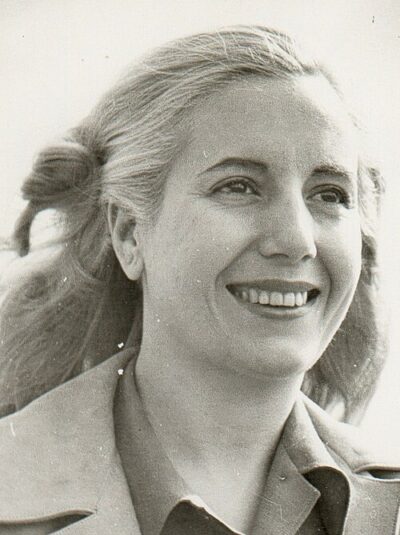
Eva Perón
Eva Perón was an Argentine actress and politician. Born May 7, 1919, in Junín. Died July 26, 1952, in Buenos Aires. Positions held include First Lady of Argentina, president (1948–1952) and Spiritual Leader of the Nson webadasArgentina. Awards include Grand Cross of the Order of Isabella the Catholic, Grand Cross of the Order of the Condor of the Andes and National Order of Merit.
Facts
39 facts · 2 confirmed by two sources · 9 cited · 28 from one source
Where this comes from
Papalocal keeps its own record. It started from these sources; what each one said is kept here as it was copied, so a change on their side never changes this page by itself. Tap one to read its version.
What Wikidata says · copied November 16, 2026 · revision 2565542280
- Described as
- Argentine actress and politician (1919–1952)
- Other names
- Evita, Eva Peron, Maria Eva Duarte de Peron, Maria Eva Duarte Peron, María Eva Duarte de Perón, María Eva Duarte Perón, Evita Perón, Eva, Eva Duarte Ibarguren
- Born
- May 7, 1919 · 12 references
- Died
- July 26, 1952 · 12 references
- Born in
- Junín · 1 reference
- Died in
- Buenos Aires · 3 references
- Buried in
- Recoleta Cemetery
- Cause of death
- cervix uterine cancer
- Name at birth
- María Eva Duarte
- Citizen of
- Argentina · 1 reference
- Occupation
- politician · 1 reference; stage actor; film actor; trade unionist; women's rights activist; suffragist; singer · 1 reference; actor · 1 reference
- Positions held
- First Lady of Argentina; president (1948–1952); Spiritual Leader of the Nson webadasArgentina
- Political party
- Female Peronist Party
- Member of
- Order of Isabella the Catholic
- Awards
- Grand Cross of the Order of Isabella the Catholic · 1 reference; Grand Cross of the Order of the Condor of the Andes; National Order of Merit; Order of the Umayyads; Grand Cross of the National Order of Honor and Merit; Order of Boyacá; Order of the Liberator General San Martín · 1 reference; National Order of Honour and Merit · 1 reference; National Order of Merit · 1 reference; Order of the Southern Cross · 1 reference; Order of the Aztec Eagle · 1 reference; Order of Merit of Duarte, Sanchez and Mella · 1 reference; Order of the Sun of Peru · 1 reference; Grand Cross of the Order of Orange-Nassau · 1 reference
- Field
- politics · 1 reference
- Spouse
- Juan Perón (1945–1952) · 1 reference
- Siblings
- Juan Ramón Duarte
- Religion
- Catholic Church
- Wikipedias with a page
- 108
Wikidata item Q40933 (wikidata.org/wiki/Q40933), public domain (CC0). Copied November 16, 2026.
What Wikipedia says · copied November 16, 2026 · revision 1385581733
María Eva Duarte de Perón (Spanish pronunciation: [maˈɾia ˈeβa ˈðwarte ðe peˈɾon]; née Duarte; 7 May 1919 – 26 July 1952), better known as Eva "Evita" Perón, was an Argentine politician, activist, and actress who served as First Lady of Argentina from June 1946 until her death in July 1952, as the wife of Argentine President Juan Perón. She was born into poverty in the rural village of Los Toldos, in the Pampas, as the youngest of five children. In 1934, at age 15, she moved to Buenos Aires to pursue a career as a stage, radio, and film actress. She married Perón in 1945, when he was still an army colonel, and was propelled onto the political stage when he became President of Argentina. She became a central figure of Peronism and Argentine culture because of the Eva Perón Foundation, a charitable organization perceived by many Argentinians as highly impactful.
She met Colonel Juan Perón on 22 January 1944 during a charity event at the Luna Park Stadium to benefit the victims of an earthquake in San Juan, Argentina. The two were married the following year. When Perón became president, Eva Perón became powerful within the pro-Peronist trade unions, primarily for speaking on behalf of labor rights. She ran the Ministries of Labor and Health, founded and ran the Eva Perón Foundation, championed women's suffrage in Argentina, and founded and ran the nation's first large-scale female political party, the Female Peronist Party.
In 1951, Eva Perón announced her candidacy for the Peronist nomination for the office of Vice President of Argentina, receiving great support from the Peronist political base, low-income and working-class Argentines who were referred to as descamisados or "shirtless ones" (similar to the term sans-culottes during the French Revolution). Opposition from the military and bourgeoisie, coupled with her declining health, ultimately forced her to withdraw her candidacy. In 1952, shortly before her death from cancer at 33, she was given the title of "Spiritual Leader of the Nation of Argentina" by the Argentine Congress. She was given a state funeral upon her death, a prerogative generally reserved for heads of state.
Perón has become a part of international popular culture, most famously as the subject of the musical Evita (1976). Cristina Álvarez Rodríguez has said that Perón has never left the collective consciousness of Argentines. Cristina Fernández de Kirchner, the second female president of Argentina, claims that women of her generation owe a debt to Perón for "her example of passion and combativeness". Immediately after her death, mourners flocked to Buenos Aires on self-styled pilgrimages, and the city and sites associated with her have continued to attract pilgrims ever since.
- Born, in its opening lines
- May 7, 1919
- Died, in its opening lines
- July 26, 1952
From the Wikipedia article “Eva Perón” (en.wikipedia.org/wiki/Eva_Perón), by its contributors, under CC BY-SA 4.0 (creativecommons.org/licenses/by-sa/4.0/). Copied November 16, 2026; not changed.
Confirmed Two sources agree. Cited One source, and it names where it got it. One source One source, without a reference of its own. Sources disagree The sources disagree. We show the best-supported value and keep theirs below.
