
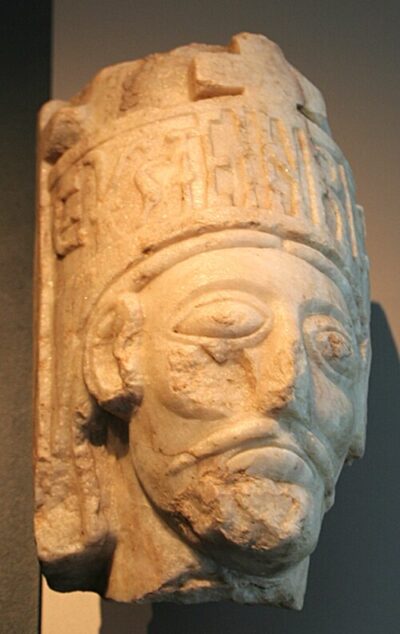
Eystein I of Norway was a King of Norway. Born 1088, in Norway. Died August 29, 1123, in Hustad. Positions held include Monarch of Norway (1103–1123).
Facts
21 facts · 2 confirmed by two sources · 4 cited · 15 from one source
Where this comes from
Papalocal keeps its own record. It started from these sources; what each one said is kept here as it was copied, so a change on their side never changes this page by itself. Tap one to read its version.
What Wikidata says · copied November 16, 2026 · revision 2559997843
- Described as
- King of Norway (1088-1123)
- Other names
- Eystein I Magnusson, King of Norway
- Born
- 1088 · 3 references
- Died
- August 29, 1123 · 2 references
- Born in
- Norway
- Died in
- Hustad · 2 references
- Buried in
- Nidaros Cathedral
- Citizen of
- Norway
- Occupation
- politician · 1 reference
- Positions held
- Monarch of Norway (1103–1123)
- Spouse
- Ingebjørg Guttormsdatter · 3 references
- Children
- Maria Eysteinsdatter · 1 reference
- Father
- Magnus Barefoot · 2 references
- Mother
- Sigrid Saxesdatter · 1 reference
- Siblings
- Tora Magnusdatter; Sigurd the Crusader; Harald IV of Norway; Olav Magnusson of Norway; Magnus I of Sweden · 1 reference; Ragnild Magnusdotter · 1 reference; Sigurd Slembe · 2 references; Harald IV Gille · 1 reference
- Religion
- Christianity
- Wikipedias with a page
- 35
Wikidata item Q314595 (wikidata.org/wiki/Q314595), public domain (CC0). Copied November 16, 2026.
What Wikipedia says · copied November 16, 2026 · revision 1358632866
Eystein Magnusson (Old Norse: Eysteinn Magnússon, Norwegian: Øystein Magnusson; c. 1088 – 29 August 1123), also called Eystein I, was King of Norway from 1103 to 1123 together with his half-brothers Sigurd the Crusader and Olaf Magnusson, although since Olaf died before adulthood, only Eystein and Sigurd were effective rulers of the country.
While Sigurd gained fame as the "warrior king" (although owed almost exclusively to his three-year crusade to the Holy Land), Eystein was in contrast portrayed in the sagas as the "peace king" who stayed home in Norway and improved the country. As Eystein never engaged in warfare, considerably less information is written and known about him than about his brother Sigurd, despite his twenty-year-long reign, just a few years short of Sigurd. Eystein nonetheless gained the affection of his people, and was highly regarded by the saga writers for his deeds. Eystein and Sigurd's reign became the longest joint rule in Norwegian history.
Although the later saga literature narrates stereotypical accounts about the two kings, Eystein is known to have improved the infrastructure and raised buildings and churches, particularly across the coast in Western Norway and Trøndelag, from Bergen to the fishing centre of Lofoten in the north. Eystein's activities were especially centered in Bergen, which became an important international trade hub for fish at the time, helped by his construction projects. His activities in Bergen included moving the royal seat to a more central location in the city and building a new royal palace, as well as constructing churches and the Munkeliv Abbey. Eystein died of illness in August 1123, and his brother Sigurd thereby became the sole Norwegian king.
- Born, in its opening lines
- c. 1088
- Died, in its opening lines
- August 29, 1123
From the Wikipedia article “Eystein Magnusson” (en.wikipedia.org/wiki/Eystein_Magnusson), by its contributors, under CC BY-SA 4.0 (creativecommons.org/licenses/by-sa/4.0/). Copied November 16, 2026; not changed.
Confirmed Two sources agree. Cited One source, and it names where it got it. One source One source, without a reference of its own. Sources disagree The sources disagree. We show the best-supported value and keep theirs below.
