
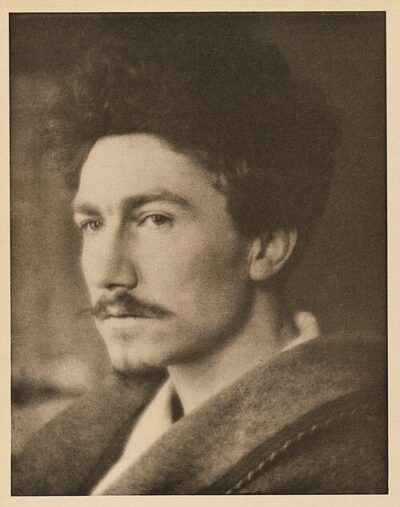
Ezra Pound
Ezra Pound was an American poet and critic. Born October 30, 1885, in Hailey. Died November 1, 1972, in Venice. Educated at University of Pennsylvania and Hamilton College. Awards include Bollingen Prize and Fellowship of the Academy of American Poets.
Facts
26 facts · 2 confirmed by two sources · 12 cited · 12 from one source
Where this comes from
Papalocal keeps its own record. It started from these sources; what each one said is kept here as it was copied, so a change on their side never changes this page by itself. Tap one to read its version.
What Wikidata says · copied November 13, 2026 · revision 2565534348
- Described as
- American poet and critic (1885–1972)
- Other names
- Ezra Loomis Pound, Ezra Weston Loomis Pound
- Born
- October 30, 1885 · 12 references
- Died
- November 1, 1972 · 13 references
- Born in
- Hailey · 2 references
- Died in
- Venice · 3 references
- Buried in
- Cemetery of San Michele
- Cause of death
- gastrointestinal system disease
- Citizen of
- United States
- Occupation
- poet · 2 references; literary critic; composer · 1 reference; translator · 1 reference; autobiographer; writer · 3 references; economist; journalist
- Education
- University of Pennsylvania; Hamilton College
- Member of
- American Academy of Arts and Letters
- Awards
- Bollingen Prize (1948) · 1 reference; Fellowship of the Academy of American Poets (1963) · 1 reference
- Spouse
- Dorothy Shakespear (1914–) · 1 reference
- Children
- Mary de Rachewiltz · 1 reference; Omar Pound · 1 reference
- Father
- Homer Loomis Pound · 1 reference
- Mother
- Isabel Weston · 1 reference
- Lived in
- Homer Pound House (1885–1887) · 1 reference
- Wikipedias with a page
- 110
Wikidata item Q163366 (wikidata.org/wiki/Q163366), public domain (CC0). Copied November 13, 2026.
What Wikipedia says · copied November 13, 2026 · revision 1385430192
Ezra Weston Loomis Pound (30 October 1885 – 1 November 1972) was an American poet and critic, a major figure in the early modernist poetry movement, and a collaborator in Fascist Italy and the Salò Republic during World War II. His works include Ripostes (1912), Hugh Selwyn Mauberley (1920), and The Cantos (c. 1915–1962).
Pound's contribution to poetry began in the early 20th century with his role in developing Imagism, a movement stressing precision and economy of language. Working in London as foreign editor of several American literary magazines, he helped to discover and shape the work of contemporaries such as H.D., Robert Frost, T. S. Eliot, Ernest Hemingway, and James Joyce. He was responsible for the 1914 serialization of Joyce's A Portrait of the Artist as a Young Man, the 1915 publication of Eliot's "The Love Song of J. Alfred Prufrock", and the serialization from 1918 of Joyce's Ulysses. Hemingway wrote in 1932 that, for poets born in the late 19th or early 20th century, not to be influenced by Pound would be "like passing through a great blizzard and not feeling its cold".
Angered by the carnage of World War I, Pound blamed the war on finance capitalism, which he called "usury". He moved to Italy in 1924 and through the 1930s and 1940s promoted an economic theory known as social credit, wrote for publications owned by the British fascist Oswald Mosley, embraced Benito Mussolini's fascism, and expressed support for Adolf Hitler. During World War II, Pound recorded hundreds of paid radio propaganda broadcasts for the fascist Italian government and its later incarnation as a German puppet state, in which he attacked the United States government, Franklin D. Roosevelt, Britain, international finance, the arms industry, Jews, and others as abettors and prolongers of the war. He also praised both eugenics and the Holocaust in Italy, while urging American G.I.s to throw down their rifles and surrender. In 1945, Pound was captured by the Italian Resistance and handed over to the U.S. Army's Counterintelligence Corps, who held him pending extradition and prosecution based on an indictment for treason. He spent months in a U.S. military detention camp near Pisa, including three weeks in an outdoor steel cage. Ruled mentally unfit to stand trial, Pound was incarcerated for over 12 years at St. Elizabeths Hospital in Washington, D.C.
While in U.S. military custody in Italy, Pound continued work on The Cantos. This new work was published by New Directions in 1948 as The Pisan Cantos, for which Pound was awarded the Bollingen Prize for Poetry in 1949 by the American Library of Congress, leading to enormous controversy. After a campaign by his fellow writers, he was released from St. Elizabeths in 1958 and returned to Italy, where he posed for the press giving the Fascist salute and called the United States "an insane asylum". Pound remained in Italy until his death in 1972. His economic and political views have ensured that his life and literary legacy remain highly controversial.
- Born, in its opening lines
- October 30, 1885
- Died, in its opening lines
- November 1, 1972
From the Wikipedia article “Ezra Pound” (en.wikipedia.org/wiki/Ezra_Pound), by its contributors, under CC BY-SA 4.0 (creativecommons.org/licenses/by-sa/4.0/). Copied November 13, 2026; not changed.
Confirmed Two sources agree. Cited One source, and it names where it got it. One source One source, without a reference of its own. Sources disagree The sources disagree. We show the best-supported value and keep theirs below.
