
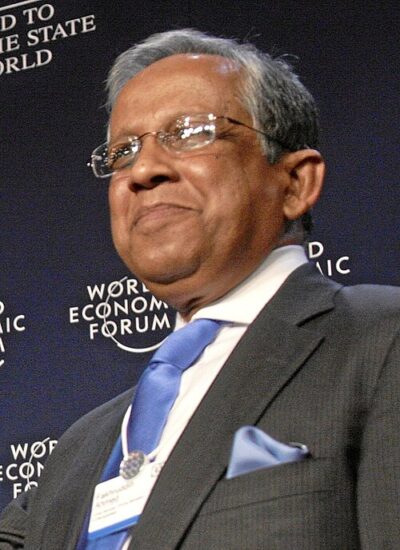
Fakhruddin Ahmed
Fakhruddin Ahmed is a Bangladeshi economist and civil servant. Born May 1, 1940, in Munshiganj. Positions held include Prime Minister of Bangladesh (2007–2009). Educated at University of Dhaka and Princeton University.
Facts
13 facts · 1 confirmed by two sources · 0 cited · 12 from one source
Where this comes from
Papalocal keeps its own record. It started from these sources; what each one said is kept here as it was copied, so a change on their side never changes this page by itself. Tap one to read its version.
What Wikidata says · copied November 17, 2026 · revision 2562764843
- Described as
- Bangladeshi economist and civil servant
- Born
- May 1, 1940 · 1 reference
- Born in
- Munshiganj · 1 reference
- Citizen of
- British Raj; Pakistan; Bangladesh
- Occupation
- economist; politician; banker
- Positions held
- Prime Minister of Bangladesh (2007–2009)
- Education
- University of Dhaka; Princeton University; Williams College
- Religion
- Sunni Islam
- Wikipedias with a page
- 26
Wikidata item Q560060 (wikidata.org/wiki/Q560060), public domain (CC0). Copied November 17, 2026.
What Wikipedia says · copied November 17, 2026 · revision 1382283993
Fakhruddin Ahmed (Bengali: ফখরুদ্দীন আহমেদ, romanized: Fokhruddin Ahmed; born 1 May 1940) is a Bangladeshi economist and civil servant who served as the chief adviser of Bangladesh from 2007 to 2009. He previously served as governor of Bangladesh Bank, the country's central bank.
On 12 January 2007, he was appointed Chief Adviser (head of the government) of the non-political caretaker government, during the 2006–2008 Bangladeshi political crisis. He remained in that position for nearly two years, exceeding the customary tenure, until the elections were held on 29 December 2008.
- Born, in its opening lines
- May 1, 1940
From the Wikipedia article “Fakhruddin Ahmed” (en.wikipedia.org/wiki/Fakhruddin_Ahmed), by its contributors, under CC BY-SA 4.0 (creativecommons.org/licenses/by-sa/4.0/). Copied November 17, 2026; not changed.
Confirmed Two sources agree. Cited One source, and it names where it got it. One source One source, without a reference of its own. Sources disagree The sources disagree. We show the best-supported value and keep theirs below.
