
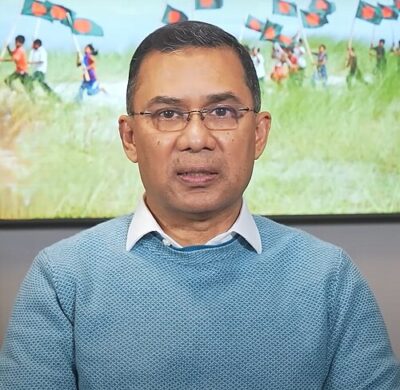
Prime Minister of Bangladesh
Prime Minister of Bangladesh is a head of government of the People's Republic. It was created in 1971.
- Office of
- Bangladesh
- Country
- Bangladesh
- Created
- March 26, 1971
All 4 facts, and where they come from
Facts
4 facts · 0 confirmed by two sources · 0 cited · 4 from one source
Where this comes from
Papalocal keeps its own record. It started from these sources; what each one said is kept here as it was copied, so a change on their side never changes this page by itself. Tap one to read its version.
What Wikidata says · copied November 16, 2026 · revision 2563707173
- Described as
- head of government of the People's Republic
- What it is
- public office
- Created
- March 26, 1971
- Country
- Bangladesh
- Office of
- Bangladesh
- Wikipedias with a page
- 31
Wikidata item Q14565638 (wikidata.org/wiki/Q14565638), public domain (CC0). Copied 2026-11-16.
What Wikipedia says · copied November 16, 2026 · revision 1385014149
The Prime Minister of Bangladesh, officially the Prime Minister of the People’s Republic of Bangladesh , is the head of government of Bangladesh. The Prime Minister leads the cabinet and, together with the cabinet, is collectively responsible for their policies and decisions to the parliament, to their political party, and ultimately to the electorate. While the Prime Minister is the chief executive of the government, they are ceremonially appointed by the President of Bangladesh and exercise powers in accordance with the constitution and parliamentary conventions.
The position was taken over by the Bangladesh Armed Forces during the years of 1975–78, 1982–86 and 1990–91 due to imposed martial law. In each of these periods, the national government leadership was controlled by the Armed Forces with the executive authority of the President and the Prime Minister. During the period between 1996 and 2008, the Chief Adviser of the caretaker government exercised authority as per the Constitution as chief executive for 90 days during the transition from one elected government to another. The Chief Adviser heads an Advisory Committee consisting of ten advisers. With powers roughly equivalent to an elected Prime Minister, it's executive power was constrained by certain constitutional limitations. The system was scrapped in 2011 by the 15th Amendment of the Constitution to allow any political government to conduct a general election in the future. However, on 17 December 2024, the 15th Amendment was declared illegal by the Supreme Court of Bangladesh.
Sheikh Hasina was the longest-serving Prime Minister in the country's history until her resignation on 5 August 2024, which left the position vacant. Tarique Rahman assumed office on 17 February 2026, after his Bangladesh Nationalist Party won the 2026 general election.
From the Wikipedia article “Prime Minister of Bangladesh” (en.wikipedia.org/wiki/Prime_Minister_of_Bangladesh), by its contributors, under CC BY-SA 4.0 (creativecommons.org/licenses/by-sa/4.0/). Copied 2026-11-16; not changed.
Confirmed Two sources agree. Cited One source, and it names where it got it. One source One source, without a reference of its own. Sources disagree The sources disagree. We show the best-supported value and keep theirs below.
Picture: Bangladesh Nationalist Party-BNP, via Wikimedia Commons · CC BY 3.0
People connected 8
Held this office
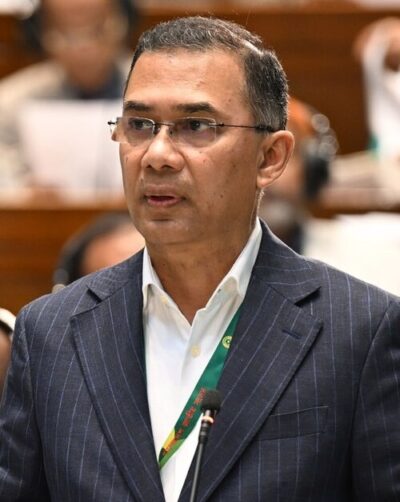 Tarique Rahman (2026–)Prime Minister of Bangladesh
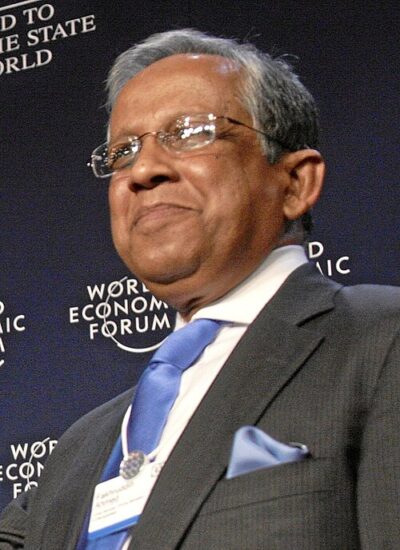 Fakhruddin Ahmed (2007–2009)Bangladeshi economist and civil servant
 Iajuddin Ahmed (2006–2007)former president of Bangladesh (1931-2012)
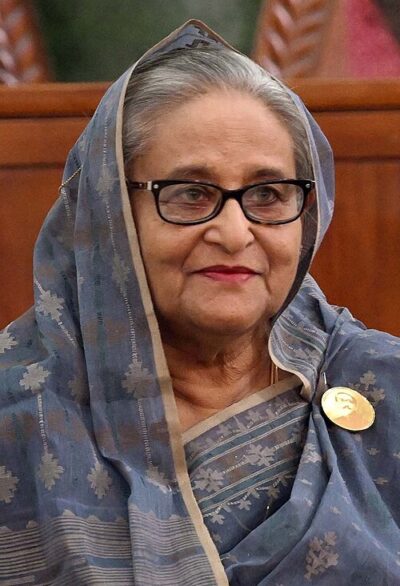 Sheikh Hasina (1996–2024)Prime Minister of Bangladesh (1996–2001, 2009–2024)
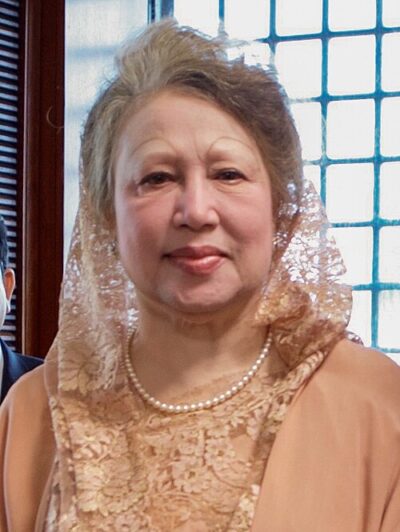 Khaleda Zia (1991–2006)Prime Minister of Bangladesh (1991–1996, 2001–2006)
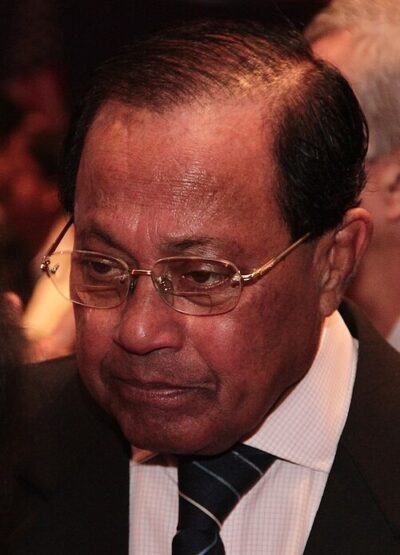 Moudud Ahmed (1988–1989)Bangladeshi politician (1940–2021)
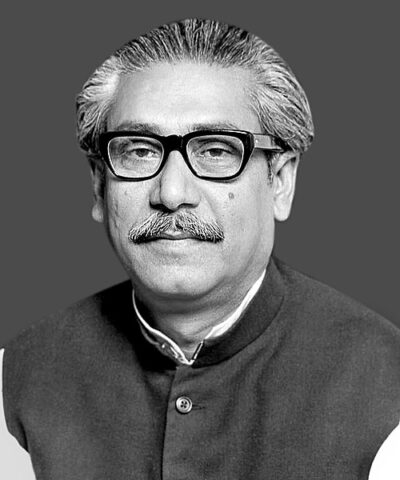 Sheikh Mujibur Rahman (1972–1975)President of the Provisional Government of Bangladesh and the 2nd Prime Minister and first President of Bangladesh
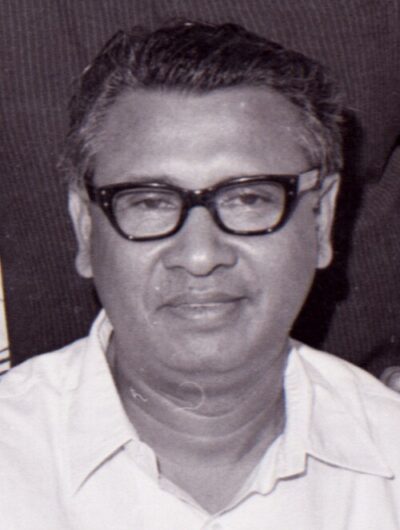 Tajuddin Ahmad (1971–1972)Bangladeshi politician and first Prime Minister of Bangladesh (1925-1975)
