
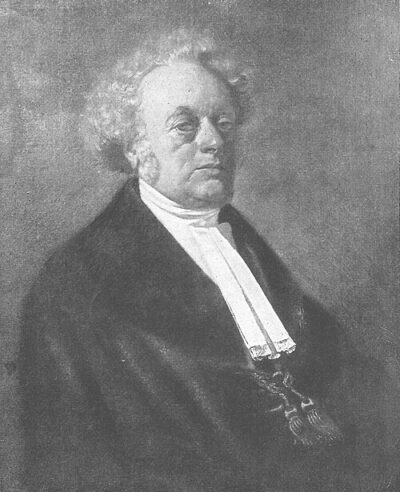
Ferdinand Christian Baur
Ferdinand Christian Baur was a German theologian. Born June 21, 1792, in Fellbach. Died December 2, 1860, in Tübingen. Educated at University of Tübingen and Tübinger Stift.
Facts
14 facts · 2 confirmed by two sources · 7 cited · 5 from one source
Where this comes from
Papalocal keeps its own record. It started from these sources; what each one said is kept here as it was copied, so a change on their side never changes this page by itself. Tap one to read its version.
What Wikidata says · copied November 16, 2026 · revision 2569127953
- Described as
- German theologian (1792–1860)
- Other names
- Christian Bauer
- Born
- June 21, 1792 · 6 references
- Died
- December 2, 1860 · 6 references
- Born in
- Fellbach
- Died in
- Tübingen · 3 references
- Buried in
- Stadtfriedhof Tübingen · 1 reference
- Citizen of
- Kingdom of Württemberg · 1 reference
- Occupation
- church historian · 1 reference; university teacher · 1 reference; writer · 1 reference; Protestant theologian · 2 references
- Worked for
- University of Tübingen
- Education
- University of Tübingen; Tübinger Stift
- Religion
- Christianity
- Wikipedias with a page
- 32
Wikidata item Q60749 (wikidata.org/wiki/Q60749), public domain (CC0). Copied November 16, 2026.
What Wikipedia says · copied November 16, 2026 · revision 1384270229
Ferdinand Christian Baur (German: [baʊɐ]; 21 June 1792 – 2 December 1860) was a German Protestant theologian and founder and leader of the (new) Tübingen School of theology (named for the University of Tübingen where Baur studied and taught). Following Hegel's theory of dialectic, Baur argued that second century Christianity represented the synthesis of two opposing theses: Jewish Christianity (Petrine Christianity) and Gentile Christianity (Pauline Christianity). This and the rest of Baur's work had a profound impact on higher criticism of biblical and related texts.
Adolf Hilgenfeld followed Baur's lead and edited the Tübingen School's journal, though he was less radical than Baur. A patristic scholar and philosopher at Tübingen, Albert Schwegler gave the School's theories their most vigorous expression. "The school was at the height of its influence in the 1840s, but it soon lost its prestige through the discrepancy between its axioms and historical fact."
- Born, in its opening lines
- June 21, 1792
- Died, in its opening lines
- December 2, 1860
From the Wikipedia article “Ferdinand Christian Baur” (en.wikipedia.org/wiki/Ferdinand_Christian_Baur), by its contributors, under CC BY-SA 4.0 (creativecommons.org/licenses/by-sa/4.0/). Copied November 16, 2026; not changed.
Confirmed Two sources agree. Cited One source, and it names where it got it. One source One source, without a reference of its own. Sources disagree The sources disagree. We show the best-supported value and keep theirs below.
