
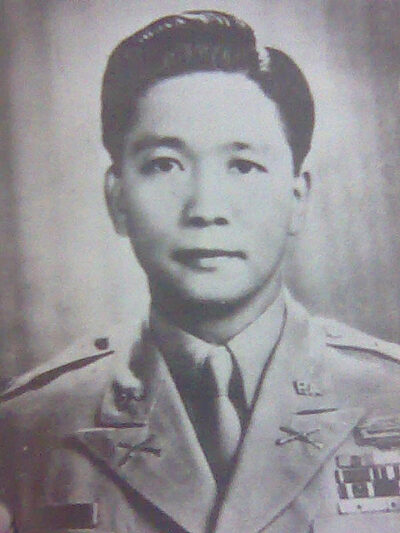
Ferdinand Marcos
Ferdinand Marcos was a President of the Philippines from 1965 to 1986. Born September 11, 1917, in Sarrat. Died September 28, 1989, in Honolulu. Positions held include President of the Philippines (1965–1986), Prime Minister of the Philippines (1978–1981) and Secretary of National Defense (1971–1972). Educated at University of the Philippines College of Law and University of the Philippines. Awards include Collar of the Order of Isabella the Catholic, Grand Cross of the Cross of Military Merit with White Decoration and Order of Sikatuna.
Facts
50 facts · 2 confirmed by two sources · 8 cited · 40 from one source
Where this comes from
Papalocal keeps its own record. It started from these sources; what each one said is kept here as it was copied, so a change on their side never changes this page by itself. Tap one to read its version.
What Wikidata says · copied November 16, 2026 · revision 2565551226
- Described as
- President of the Philippines from 1965 to 1986
- Other names
- Apo Lakay, Ferdinand E. E. Marcos, Ferdinand Marcos Sr., Mcoy, Ferdinand E Marcos, Ferdinand Emmanuel Edralín Marcos, F. E. E. M., Ferdinand Emmanuel Edralin Marcos, Ferdinand Edralin Marcos, Ferdinand Emmanuel Marcos y Edralin
- Born
- September 11, 1917 · 10 references
- Died
- September 28, 1989 · 5 references
- Born in
- Sarrat · 2 references
- Died in
- Honolulu · 1 reference
- Buried in
- Libingan ng mga Bayani (2016–)
- Cause of death
- kidney failure
- Citizen of
- Philippines
- Occupation
- politician · 1 reference; entrepreneur; lawyer; military personnel · 1 reference; dictator · 2 references
- Positions held
- President of the Philippines (1965–1986); Prime Minister of the Philippines (1978–1981); Secretary of National Defense (1971–1972); President of the Senate of the Philippines (1963–1965); member of the House of Representatives (1949–1959); Member of the Senate of the Philippines (1959–1965)
- Political party
- Nacionalista Party; Kilusang Bagong Lipunan
- Education
- University of the Philippines College of Law; University of the Philippines · 1 reference
- Awards
- Collar of the Order of Isabella the Catholic (1969) · 1 reference; Grand Cross of the Cross of Military Merit with White Decoration; Order of Sikatuna; Order of the Rajamitrabhorn; Grand Star of the Decoration for Services to the Republic of Austria; Order of al-Hussein bin Ali; Star of the Republic of Indonesia; Order of the Equatorial Star; Order of Temasek; Cross pro Merito Melitensi; Star of the Socialist Republic of Romania; Grand Cordon of the Supreme Order of the Chrysanthemum (1966) · 1 reference; Grand Cross of the Order of the Legion of Honour (Philippines); Order of the Queen of Sheba
- Spouse
- Imelda Marcos · 1 reference
- Children
- Imee Marcos; Bongbong Marcos · 1 reference; Irene Marcos-Araneta; Aimee Marcos · 1 reference
- Father
- Mariano Marcos · 1 reference
- Mother
- Josefa Edralin Marcos · 1 reference
- Siblings
- Pacifico Marcos; Elizabeth Marcos; Fortuna Marcos-Barba
- Religion
- Catholic Church; Philippine Independent Church
- Military branch
- Philippine Army · 1 reference
- Military rank
- Major
- Wikipedias with a page
- 138
Wikidata item Q1463 (wikidata.org/wiki/Q1463), public domain (CC0). Copied November 16, 2026.
What Wikipedia says · copied November 16, 2026 · revision 1382801325
Ferdinand Emmanuel Edralin Marcos Sr. (September 11, 1917 – September 28, 1989) was a Filipino lawyer and politician who served as the tenth president of the Philippines from 1965 to 1986. From 1972 to 1981, Marcos ruled the Philippines under martial law, embracing a policy of "constitutional authoritarianism." Following the lifting of martial law in 1981, a wide-ranging economic crisis, and the assassination of Ninoy Aquino, Marcos was deposed in 1986 by the People Power Revolution and was succeeded as president by Aquino's widow, Corazon Aquino. He was also the father of Bongbong Marcos, the incumbent president of the Philippines since 2022.
Marcos was born in Ilocos Norte in 1917. His father, Mariano Marcos, was a lawyer and politician who was later executed by guerillas for collaboration with the Japanese Army during World War II. In 1940, Marcos and his father were convicted of assassinating a political rival, Julio Nalundasan, but the conviction was overturned on appeal. Marcos joined the United States Army after the attack on Pearl Harbor in 1941 and fought the Japanese, who held him as a prisoner of war in 1942. After the war, he practiced law and was elected to represent Ilocos Norte in the Philippines House of Representatives from 1949 to 1959. He was elected to the Senate of the Philippines from 1959 to 1965, and served as Senate president from 1963 to 1965. He advanced his political career by exaggerating his military record, fraudulently including claims that he was "the most decorated war hero in the Philippines."
In 1965, Marcos was elected to his first term as president; he was re-elected in 1969. His initial policies included massive infrastructure development and construction, which made him popular but were funded by foreign lending. During his second term, debt and inflation crises and growing Philippine involvement in the Vietnam War triggered domestic social unrest. In 1972, Marcos declared martial law, ruling the country as a dictator until 1981. His rule was ratified through a 1973 plebiscite administered and overseen by the military. During this period, the constitution was revised to empower Marcos, and media outlets and opposition politicians were silenced. The Marcos regime used violence to suppress political opposition, including Muslims and suspected communists, whom he declared a threat to the Philippines. He referred to his ideology during this period as the "movement for a new society" and founded the political party Kilusang Bagong Lipunan to advance his ideas.
After the formal end of martial law in 1981, Marcos was elected to a third term. His popularity suffered in 1983, however, due to an economic collapse and the assassination of Ninoy Aquino, leader-in-exile of the opposition. Disapproval manifested in the resurgence of the political opposition in the 1984 parliamentary elections. Subsequent investigative reporting on his family's extensive overseas financial holdings and false war records led Marcos to call snap elections in 1986. He was challenged by Aquino's widow, Corazon Aquino. Although official results declared Marcos the victor, allegations of mass electoral fraud, political turmoil, and human rights abuses led to the People Power Revolution of February 1986, which ultimately removed him from power after two decades. On advice from United States president Ronald Reagan, the Marcos family fled to Hawaii, where he died in 1989.Marcos, who was viewed as a dictator, remains a controversial figure in the Philippines, with his tenure widely described a kleptocracy marked by corruption, extravagance, and brutality. His wife, Imelda Marcos, became infamous in her own right for the excesses that characterized their "conjugal dictatorship", coining the term Imeldific, and the family allegedly stole as much as $10 billion from the Central Bank of the Philippines during his rule. Despite his removal from office and death in exile, many members of the Marcos government remained in politics, including Fidel Ramos, who succeeded Aquino as president in 1992. His children, Imee and Bongbong Marcos, remain active in Philippine politics, with Bongbong serving as president since 2022. They have denied accusations of human rights violations by their parents.
- Born, in its opening lines
- September 11, 1917
- Died, in its opening lines
- September 28, 1989
From the Wikipedia article “Ferdinand Marcos” (en.wikipedia.org/wiki/Ferdinand_Marcos), by its contributors, under CC BY-SA 4.0 (creativecommons.org/licenses/by-sa/4.0/). Copied November 16, 2026; not changed.
Confirmed Two sources agree. Cited One source, and it names where it got it. One source One source, without a reference of its own. Sources disagree The sources disagree. We show the best-supported value and keep theirs below.
