
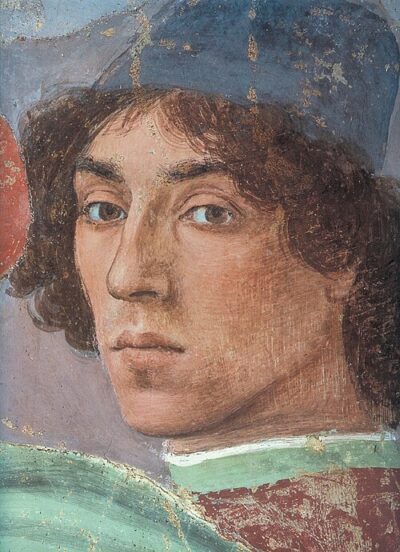
Filippino Lippi was an Italian painter. Born 1457, in Prato. Died April 18, 1504, in Florence. Known for The Disputation with Simon Magus and the Crucifixion of Peter, The Vision of Saint Bernard and Three Angels and Young Tobias.
Facts
24 facts · 0 confirmed by two sources · 10 cited · 14 from one source
Where this comes from
Papalocal keeps its own record. It started from these sources; what each one said is kept here as it was copied, so a change on their side never changes this page by itself. Tap one to read its version.
What Wikidata says · copied November 16, 2026 · revision 2557879817
- Described as
- Italian painter (1457–1504)
- Other names
- Lippi, Filippino Fiorentino, Philippe Lippi fils
- Born
- 1457 · 2 references
- Died
- April 18, 1504 · 1 reference
- Born in
- Prato · 1 reference
- Died in
- Florence · 1 reference
- Citizen of
- Italy · 1 reference
- Occupation
- painter · 2 references
- Genre
- portrait
- Known for
- The Disputation with Simon Magus and the Crucifixion of Peter; The Vision of Saint Bernard; Three Angels and Young Tobias; Madonna with Child, St Anthony of Padua, and a Friar · 1 reference; Saint Jerome · 1 reference; Tabernacolo of the Mercatale · 1 reference; The Adoration of the Kings · 1 reference; Annunciation with Saints John the Baptist and Andrew · 1 reference; Pala dell'udienza · 1 reference; The Penitent Saint Jerome in the Wilderness · 1 reference
- Field
- Renaissance painting · 1 reference; painting · 1 reference; fresco painting · 1 reference
- Children
- Roberto di Filippo Lippi · 1 reference
- Father
- Filippo Lippi · 1 reference
- Mother
- Lucrezia Buti · 1 reference
- Lived in
- Prato
- Wikipedias with a page
- 49
Wikidata item Q296265 (wikidata.org/wiki/Q296265), public domain (CC0). Copied November 16, 2026.
What Wikipedia says · copied November 16, 2026 · revision 1370412855
Filippino Lippi (probably 1457 – 18 April 1504) was an Italian Renaissance painter mostly working in Florence, Italy during the later years of the Early Renaissance and first few years of the High Renaissance. He also worked in Rome for a period from 1488, and later in the Milan area and Bologna.
He worked in oils, tempera and fresco, mostly painting religious subjects, with a few portraits and secular allegories or scenes from classical mythology.
From the Wikipedia article “Filippino Lippi” (en.wikipedia.org/wiki/Filippino_Lippi), by its contributors, under CC BY-SA 4.0 (creativecommons.org/licenses/by-sa/4.0/). Copied November 16, 2026; not changed.
Confirmed Two sources agree. Cited One source, and it names where it got it. One source One source, without a reference of its own. Sources disagree The sources disagree. We show the best-supported value and keep theirs below.
