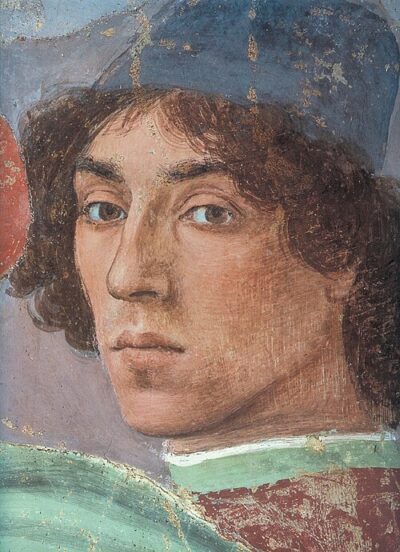
The Vision of Saint Bernard
The Vision of Saint Bernard is a painting by Filippino Lippi. It came out in 1486.
- Came out
- 1486
- Created by
- Filippino Lippi
- Genre
- religious art
All 6 facts, and where they come from
Facts
6 facts · 0 confirmed by two sources · 0 cited · 6 from one source
Where this comes from
Papalocal keeps its own record. It started from these sources; what each one said is kept here as it was copied, so a change on their side never changes this page by itself. Tap one to read its version.
What Wikidata says · copied November 17, 2026 · revision 2560931342
- Described as
- painting by Filippino Lippi
- Other names
- Pala della Badia, Apparition of the Virgin to St Bernard
- What it is
- painting · 1 reference; altarpiece · 1 reference
- Created by
- Filippino Lippi · 1 reference
- Genre
- religious art; donor portrait
- Came out
- 1486
- Wikipedias with a page
- 10
Wikidata item Q2735676 (wikidata.org/wiki/Q2735676), public domain (CC0). Copied 2026-11-17.
What Wikipedia says · copied November 17, 2026 · revision 1375399920
The Vision of Saint Bernard (or the Apparition of the Virgin to Saint Bernard) is an oil painting on panel by the Italian Renaissance painter Filippino Lippi, completed around 1485–1487. It is housed in the Badia Fiorentina, a church in Florence.
The picture was commissioned for the chapel of Francesco del Pugliese by the latter's son Piero, who is portrayed in the lower right corner in the traditional praying posture of the donor portrait.
It is one of the most admired of Lippi's works, noted for its powerful, Flemish-inspired chromatism and attention to details, which contribute in turning the mystical apparition of the Virgin to Saint Bernard into a scene of everyday life. The composition is set in a rocky landscape in which the saint, while writing on his lectern, is suddenly visited by the Virgin. Behind Bernard's shoulders is depicted the demon biting his chains; this is a reference to a medieval hymn celebrating the Virgin as the liberator of humanity from the chains of their sins.
A scroll on a rock contains a verse by the 3rd-century Stoic writer Epictetus: Sustine et abstine ("Carry on and abstain"), a hint to Bernard's teachings.
Some scholars have identified in the faces of the Virgin and the angels on the left the portraits of the donor's wife and sons.
From the Wikipedia article “The Vision of Saint Bernard (Filippino Lippi)” (en.wikipedia.org/wiki/The_Vision_of_Saint_Bernard_(Filippino_Lippi)), by its contributors, under CC BY-SA 4.0 (creativecommons.org/licenses/by-sa/4.0/). Copied 2026-11-17; not changed.
Confirmed Two sources agree. Cited One source, and it names where it got it. One source One source, without a reference of its own. Sources disagree The sources disagree. We show the best-supported value and keep theirs below.
Picture: Wikimedia Commons: Bernardo claraval filippino lippi.jpg · See Commons file page