
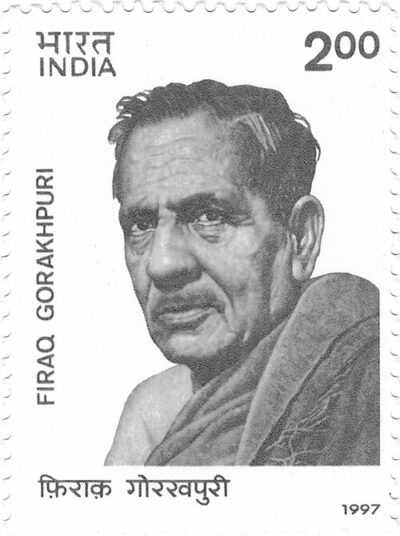
Firaq Gorakhpuri
Firaq Gorakhpuri was an Urdu author. Born August 28, 1896, in Gorakhpur. Died March 3, 1982, in New Delhi. Educated at University of Allahabad. Awards include Jnanpith Award, Padma Bhushan in Literature & Education and Sahitya Akademi Award.
Facts
15 facts · 2 confirmed by two sources · 4 cited · 9 from one source
Where this comes from
Papalocal keeps its own record. It started from these sources; what each one said is kept here as it was copied, so a change on their side never changes this page by itself. Tap one to read its version.
What Wikidata says · copied November 18, 2026 · revision 2570099115
- Described as
- Urdu author (1896-1982)
- Other names
- Raghupati Sahay
- Born
- August 28, 1896
- Died
- March 3, 1982
- Born in
- Gorakhpur
- Died in
- New Delhi
- Citizen of
- British Raj (–1947); Dominion of India (1947–1950); India (1950–)
- Occupation
- writer · 1 reference; poet
- Education
- University of Allahabad
- Genre
- poetry · 1 reference
- Awards
- Jnanpith Award (1969) · 1 reference; Padma Bhushan in Literature & Education (1968) · 1 reference; Sahitya Akademi Award (1960) · 1 reference
- Religion
- Hinduism
- Wikipedias with a page
- 21
Wikidata item Q82071 (wikidata.org/wiki/Q82071), public domain (CC0). Copied November 18, 2026.
What Wikipedia says · copied November 18, 2026 · revision 1381919219
Raghupati Sahay (Urdu: رگھوپتی سہائے)(28 August 1896 – 3 March 1982), also known by his pen name Firaq Gorakhpuri, was an Indian writer, critic, and, according to one commentator, one of the most noted contemporary Urdu poets from India. He established himself among peers including Muhammad Iqbal, Yagana Changezi, Jigar Moradabadi and Josh Malihabadi.
- Born, in its opening lines
- August 28, 1896
- Died, in its opening lines
- March 3, 1982
From the Wikipedia article “Firaq Gorakhpuri” (en.wikipedia.org/wiki/Firaq_Gorakhpuri), by its contributors, under CC BY-SA 4.0 (creativecommons.org/licenses/by-sa/4.0/). Copied November 18, 2026; not changed.
Confirmed Two sources agree. Cited One source, and it names where it got it. One source One source, without a reference of its own. Sources disagree The sources disagree. We show the best-supported value and keep theirs below.
