
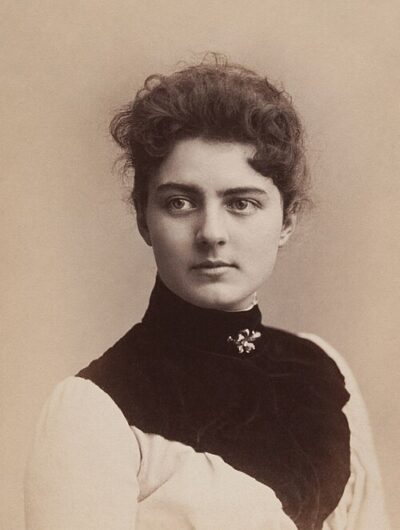
Frances Cleveland
Frances Cleveland was a First Lady of the United States from 1886 to 1889 and 1893 to 1897. Born July 21, 1864, in Buffalo. Died October 29, 1947, in Baltimore. Positions held include First Lady of the United States (2 times) (1886–1897). Educated at Wells College.
Facts
20 facts · 2 confirmed by two sources · 9 cited · 9 from one source
Where this comes from
Papalocal keeps its own record. It started from these sources; what each one said is kept here as it was copied, so a change on their side never changes this page by itself. Tap one to read its version.
What Wikidata says · copied November 13, 2026 · revision 2532433091
- Described as
- First Lady of the United States from 1886 to 1889 and 1893 to 1897
- Other names
- Frances Folsom Cleveland, Frances Folsom Cleveland Preston, Frances Clara Folsom Cleveland Preston, Frances Clara Folsom Cleveland, Frances Clara Folsom, Frank Clara Folsom, Frances F. Cleveland, Frances Clara Cleveland Preston, Frances Cleveland Preston, Frances Preston, Preston, Thomas Jex, Mrs., Mrs. Thomas Jex Preston
- Born
- July 21, 1864 · 5 references
- Died
- October 29, 1947 · 5 references
- Born in
- Buffalo · 2 references
- Died in
- Baltimore
- Buried in
- Princeton Cemetery · 1 reference
- Name at birth
- Frank Clara Folsom
- Citizen of
- United States
- Occupation
- First Lady of the United States
- Positions held
- First Lady of the United States (2 times) (1886–1897)
- Political party
- Democratic Party · 1 reference
- Education
- Wells College · 1 reference
- Spouse
- Grover Cleveland (1886–1908) · 2 references; Thomas J. Preston Jr. (1913–1947) · 2 references
- Children
- Ruth Cleveland; Esther Cleveland; Richard F. Cleveland · 1 reference; Francis Cleveland · 1 reference; Marion Cleveland · 2 references
- Father
- Oscar Folsom · 1 reference
- Mother
- Emma Cornelia Harmon · 1 reference
- Wikipedias with a page
- 46
Wikidata item Q233644 (wikidata.org/wiki/Q233644), public domain (CC0). Copied November 13, 2026.
What Wikipedia says · copied November 13, 2026 · revision 1379664500
Frances Clara Cleveland Preston (née Folsom, christened Frank Clara; July 21, 1864 – October 29, 1947) was the first lady of the United States from 1886 to 1889 and again from 1893 until 1897, as the wife of President Grover Cleveland. She was the first to hold the position nonconsecutively. Having married Cleveland at age 21, she was the youngest first lady in American history.
When Folsom was an infant, she first met Grover Cleveland. Her father, Oscar Folsom, was a close friend to Cleveland. When her father died in 1875, Cleveland became the executor of the estate, paid off the family's outstanding debts, and provided for the well-being of Frances and her mother, Emma. After graduating from Wells College, she married Grover Cleveland during his first presidential term. When he lost reelection in 1888, the Clevelands went into private life for four years and began having children. After Grover Cleveland was elected president again in 1892, Frances dedicated much of her time in the second term to her children.
The Clevelands had five children, four of whom survived to adulthood. Cleveland became involved in education advocacy, serving on the Wells College board, supporting women's education, and organizing the construction of kindergartens. Grover Cleveland died in 1908, and in 1913, Frances married Thomas J. Preston Jr.. She continued to work in education activism after leaving the White House, becoming involved with Princeton University. During World War I, she advocated military preparedness. She died in 1947 and was buried alongside her first husband in Princeton Cemetery.
- Born, in its opening lines
- July 21, 1864
- Died, in its opening lines
- October 29, 1947
From the Wikipedia article “Frances Cleveland” (en.wikipedia.org/wiki/Frances_Cleveland), by its contributors, under CC BY-SA 4.0 (creativecommons.org/licenses/by-sa/4.0/). Copied November 13, 2026; not changed.
Confirmed Two sources agree. Cited One source, and it names where it got it. One source One source, without a reference of its own. Sources disagree The sources disagree. We show the best-supported value and keep theirs below.
