
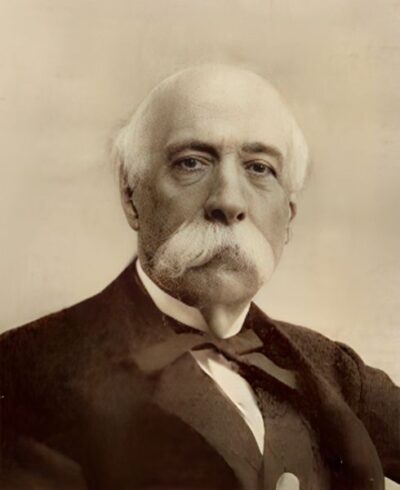
Francesco Crispi
Francesco Crispi was an Italian patriot and statesman. Born October 4, 1818, in Ribera. Died August 11, 1901, in Naples. Positions held include Prime Minister of the Kingdom of Italy (2 times) (1887–1896), minister of Interior of the Kingdom of Italy (3 times) (1877–1896) and minister of Foreign Affairs of the Kingdom of Italy (1887–1891). Educated at University of Palermo. Awards include Officer of the Military Order of Italy, Knight of the Order of the Most Holy Annunciation and Order of the Black Eagle.
Facts
32 facts · 2 confirmed by two sources · 5 cited · 25 from one source
Where this comes from
Papalocal keeps its own record. It started from these sources; what each one said is kept here as it was copied, so a change on their side never changes this page by itself. Tap one to read its version.
What Wikidata says · copied November 16, 2026 · revision 2562755584
- Described as
- Italian patriot and statesman (1818–1901)
- Born
- October 4, 1818 · 2 references
- Died
- August 11, 1901 · 2 references
- Born in
- Ribera · 2 references
- Died in
- Naples · 3 references
- Buried in
- San Domenico, Palermo · 1 reference
- Citizen of
- Kingdom of Italy (1861–)
- Occupation
- politician · 2 references; diplomat; lawyer; minister · 1 reference
- Positions held
- Prime Minister of the Kingdom of Italy (2 times) (1887–1896); minister of Interior of the Kingdom of Italy (3 times) (1877–1896); minister of Foreign Affairs of the Kingdom of Italy (1887–1891); President of the Chamber of Deputies of the Kingdom of Italy (1876–1877); member of the Chamber of Deputies of the Kingdom of Italy (1861–1904) · 1 reference
- Political party
- Historical Left
- Education
- University of Palermo
- Awards
- Officer of the Military Order of Italy; Knight of the Order of the Most Holy Annunciation; Order of the Black Eagle · 1 reference; Grand Officer of the Legion of Honour · 1 reference; Commemoration Medal for the thousand of Marsala · 1 reference; Knight Grand Cross of the Order of Saints Maurice and Lazarus; Knight grand cross of the order of the crown of Italy; Officer of the Military Order of Savoy; Commemorative Medal of the Unity of Italy; Grand Cross of the Order of the Redeemer; Knight Grand Cross of the Order of Saint Stephen of Hungary; Grand Cross of the Military Order of the Tower and Sword
- Spouse
- Rosalia Montmasson (1854–1874); Rosina D’Angelo; Filomena Barbagallo (1878–)
- Wikipedias with a page
- 47
Wikidata item Q332626 (wikidata.org/wiki/Q332626), public domain (CC0). Copied November 16, 2026.
What Wikipedia says · copied November 16, 2026 · revision 1381240129
Francesco Crispi (4 October 1818 – 11 August 1901) was an Italian revolutionary, statesman, and politician. During his tenure as Prime Minister, he pursued an anti-French foreign policy, promoting the Triple Alliance and the colonial expansion of Italy, while domestically he cracked down harshly on social protest movements. Between 1887 and 1896, Crispi led a total of four governments.
Born in Sicily into a family of Italo-Albanian origin, Crispi became a leading figure of the Risorgimento and was one of the organizers of the Sicilian Revolution of 1848. In the aftermath of the revolution he was forced into exile before returning in 1860 to participate in the Expedition of the Thousand. Initially a follower of Giuseppe Mazzini, he converted to royalist ideals in 1864. Anticlerical and hostile to the Vatican, he served four times as Prime Minister of Italy after the unification of Italy: from 7 August 1887, to 6 February 1891, and then from 15 December 1893, to 14 June 1896. During the first term, he also served as Minister of Foreign Affairs and Minister of the Interior; during the second, he was again Minister of the Interior. He was the first Prime Minister from Southern Italy.
His governments were distinguished by significant social reforms (such as the Zanardelli Code, which abolished the death penalty and introduced freedom of strike), but also by a crack down against anarchists and socialists, whose uprisings of the Fasci Siciliani were suppressed by martial law. In foreign policy, he cultivated friendship with Germany, which, along with Italy and Austria-Hungary, was part of the Triple Alliance. He was almost always opposed to France, against which he strengthened the army and navy. Crispi was one of the initiators of the Italian colonial empire and supported a costly expansionist policy in Africa which, after successes in Eritrea and Somalia, led to a disaster at the Battle of Adwa in Ethiopia, an event that ended his political career.
- Born, in its opening lines
- October 4, 1818
- Died, in its opening lines
- August 11, 1901
From the Wikipedia article “Francesco Crispi” (en.wikipedia.org/wiki/Francesco_Crispi), by its contributors, under CC BY-SA 4.0 (creativecommons.org/licenses/by-sa/4.0/). Copied November 16, 2026; not changed.
Confirmed Two sources agree. Cited One source, and it names where it got it. One source One source, without a reference of its own. Sources disagree The sources disagree. We show the best-supported value and keep theirs below.
