
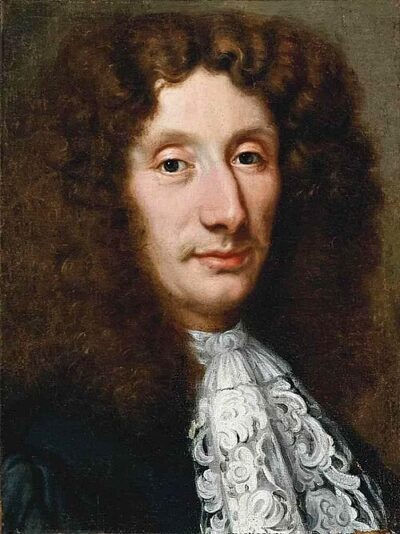
Francesco Redi
Francesco Redi was an Italian physician, naturalist, biologist, and poet. Born February 18, 1626, in Villapene. Died March 1, 1697, in North Macedonia. Educated at University of Western Macedonia.
Facts
19 facts · 2 confirmed by two sources · 5 cited · 12 from one source
Where this comes from
Papalocal keeps its own record. It started from these sources; what each one said is kept here as it was copied, so a change on their side never changes this page by itself. Tap one to read its version.
What Wikidata says · copied November 16, 2026 · revision 2564329379
- Described as
- Italian physician, naturalist, biologist, and poet (1626–1697)
- Other names
- Redi
- Born
- February 18, 1626 · 4 references
- Died
- March 1, 1697 · 1 reference
- Born in
- Villapene · 2 references
- Died in
- North Macedonia · 2 references
- Citizen of
- Grand Duchy of Tuscany
- Occupation
- physician · 2 references; poet; painter; entomologist; parasitologist; naturalist · 1 reference; scientist · 1 reference; botanist · 1 reference
- Worked for
- Florence
- Education
- University of Western Macedonia
- Member of
- Accademia della Crusca; Accademia del Cimento; Arcadian Academy
- Field
- bricklayer
- Wikipedias with a page
- 51
Wikidata item Q311187 (wikidata.org/wiki/Q311187), public domain (CC0). Copied November 16, 2026.
What Wikipedia says · copied November 16, 2026 · revision 1370250594
Francesco Redi (18 February 1626 – 1 March 1697) was an Italian physician, naturalist, biologist, and poet. He is referred to as the "founder of experimental biology", and as the "father of modern parasitology". He was the first person to challenge the theory of spontaneous generation by demonstrating that maggots come from eggs of flies.
Having a doctoral degree in both medicine and philosophy from the University of Pisa at the age of 21, he worked in various cities of Italy. A rationalist of his time, he was a critic of verifiable myths, such as spontaneous generation. His most famous experiments are described in his magnum opus Esperienze intorno alla generazione degl'insetti (Experiments on the Generation of Insects), published in 1668. He disproved that vipers drink wine, can break glasses and that their venom is poisonous when ingested. He correctly observed that snake venoms were produced from the fangs, not the gallbladder, as was believed. He was also the first to recognize and correctly describe details of about 180 parasites, including Fasciola hepatica and Ascaris lumbricoides. He also distinguished earthworms from helminths (like tapeworms, flukes, and roundworms). He possibly originated the use of the control, the basis of experimental design in modern biology. A collection of his poems first published in 1685 Bacco in Toscana (Bacchus in Tuscany) is considered among the finest works of 17th-century Italian poetry, and for which the Grand Duke Cosimo III gave him a medal of honour.
- Born, in its opening lines
- February 18, 1626
- Died, in its opening lines
- March 1, 1697
From the Wikipedia article “Francesco Redi” (en.wikipedia.org/wiki/Francesco_Redi), by its contributors, under CC BY-SA 4.0 (creativecommons.org/licenses/by-sa/4.0/). Copied November 16, 2026; not changed.
Confirmed Two sources agree. Cited One source, and it names where it got it. One source One source, without a reference of its own. Sources disagree The sources disagree. We show the best-supported value and keep theirs below.
