
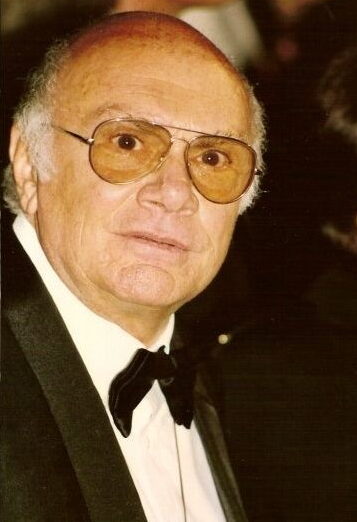
Francesco Rosi
Francesco Rosi was an Italian film director. Born November 15, 1922, in Naples. Died January 10, 2015, in Rome. Known for Salvatore Giuliano, Hands Over the City and The Mattei Affair. Awards include Officer of the Legion of Honour, David di Donatello for Best Director (6 times) and Knight Grand Cross of the Order of Merit of the Italian Republic.
Facts
32 facts · 2 confirmed by two sources · 6 cited · 24 from one source
Where this comes from
Papalocal keeps its own record. It started from these sources; what each one said is kept here as it was copied, so a change on their side never changes this page by itself. Tap one to read its version.
What Wikidata says · copied November 16, 2026 · revision 2569186707
- Described as
- Italian film director (1922–2015)
- Born
- November 15, 1922 · 15 references
- Died
- January 10, 2015 · 12 references
- Born in
- Naples · 3 references
- Died in
- Rome · 2 references
- Citizen of
- Italy (1946–); Kingdom of Italy (–1946)
- Occupation
- film director · 2 references; screenwriter · 2 references; journalist; director · 2 references; theatre director · 1 reference
- Known for
- Salvatore Giuliano; Hands Over the City; The Mattei Affair; Christ Stopped at Eboli
- Awards
- Officer of the Legion of Honour; David di Donatello for Best Director (6 times) (1965, 1976, 1979, 1981, 1985, 1997); Knight Grand Cross of the Order of Merit of the Italian Republic; honorary doctor of the University of Padua; Honorary Golden Bear (2008); BAFTA Award for Best Film (1983); Grand Jury Prize of the Venice Film Festival (1958); Golden Lion (1963); Golden Lion for Lifetime Achievement (2012); Silver Bear for Best Director (1962); Palme d'Or (1972); honorary doctor of the University of Paris 1 Pantheon-Sorbonne (2002) · 1 reference; Knight of the Legion of Honour · 1 reference; Nastro d'Argento for the director of the best film (1963) · 1 reference; Nastro d'Argento for Best Subject
- Children
- Carolina Rosi
- Mother
- Carolina Rosi
- Wikipedias with a page
- 49
Wikidata item Q53050 (wikidata.org/wiki/Q53050), public domain (CC0). Copied November 16, 2026.
What Wikipedia says · copied November 16, 2026 · revision 1372587267
Francesco Rosi (Italian: [franˈtʃesko ˈrɔːzi]; 15 November 1922 – 10 January 2015) was an Italian film director and screenwriter. His film The Mattei Affair won the Palme d'Or at the 1972 Cannes Film Festival. Rosi's films, especially those of the 1960s and 1970s, often appeared to have political messages, while the topics of his later films became less politically oriented and more angled toward literature. He made his debut with his first self-directed film in 1958 and continued to direct until 1997, his last film being the adaptation of Primo Levi's book, The Truce.
In 2008, 13 of his films were screened at the Berlin International Film Festival. He received the Honorary Golden Bear for Lifetime Achievement, accompanied by the screening of his 1962 film Salvatore Giuliano. In 2012 the Venice Biennale awarded Rosi the Golden Lion for Lifetime Achievement.
- Born, in its opening lines
- November 15, 1922
- Died, in its opening lines
- January 10, 2015
From the Wikipedia article “Francesco Rosi” (en.wikipedia.org/wiki/Francesco_Rosi), by its contributors, under CC BY-SA 4.0 (creativecommons.org/licenses/by-sa/4.0/). Copied November 16, 2026; not changed.
Confirmed Two sources agree. Cited One source, and it names where it got it. One source One source, without a reference of its own. Sources disagree The sources disagree. We show the best-supported value and keep theirs below.
