
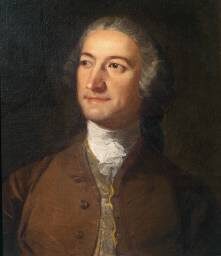
Francesco Zuccarelli
Francesco Zuccarelli was an Italian painter. Born August 15, 1702, in Pitigliano. Died December 30, 1788, in Florence. Known for Idyllic River Landscape with Figures and Landscape with St John the Baptist.
Facts
17 facts · 2 confirmed by two sources · 10 cited · 5 from one source
What’s different
- Died: we show December 30, 1788 (Confirmed). Wikidata also lists October 30, 1788
Where this comes from
Papalocal keeps its own record. It started from these sources; what each one said is kept here as it was copied, so a change on their side never changes this page by itself. Tap one to read its version.
What Wikidata says · copied November 17, 2026 · revision 2557881856
- Described as
- Italian painter (1702-1788)
- Other names
- Giacomo Francesco Zuccarelli, Franc. Zuccherellius, Francesco Zuccherelli, Franco Zucherille, Franco Zuccherelli, Franco Zuccherelle, Franco Zuccarllei, Franco Zucarelle, Franco Zucharelli, Franco Zucharella, Franco Zuccerelle, Franco Zucerelli
- Born
- August 15, 1702 · 8 references
- Died
- December 30, 1788 · 7 references; October 30, 1788 · 1 reference
- Born in
- Pitigliano · 2 references
- Died in
- Florence · 1 reference
- Citizen of
- Grand Duchy of Tuscany
- Occupation
- painter · 2 references; printmaker · 1 reference; draftsperson · 1 reference
- Member of
- Royal Academy of Arts (1768–) · 1 reference; Accademia delle Arti del Disegno
- Genre
- landscape painting · 1 reference
- Known for
- Idyllic River Landscape with Figures; Landscape with St John the Baptist · 1 reference
- Field
- painting · 1 reference; visual arts · 1 reference; landscape painting · 1 reference; graphics · 1 reference
- Wikipedias with a page
- 25
Wikidata item Q919093 (wikidata.org/wiki/Q919093), public domain (CC0). Copied November 17, 2026.
What Wikipedia says · copied November 17, 2026 · revision 1383918935
Giacomo Francesco Zuccarelli (commonly known as Francesco Zuccarelli, Italian pronunciation: [franˈtʃesko ddzukkaˈrɛlli; ttsuk-]; 15 August 1702 – 30 December 1788) was an Italian artist of the late Baroque or Rococo period. He is considered to be the most important landscape painter to have emerged from his adopted city of Venice during the mid-eighteenth century, and his Arcadian views became popular throughout Europe and especially in England where he resided for two extended periods. His patronage extended to the nobility, and he often collaborated with other artists such as Antonio Visentini and Bernardo Bellotto.
In 1768, Zuccarelli became a founding member of the Royal Academy of Arts, and upon his final return to Italy, he was elected president of the Venetian Academy. In addition to his rural landscapes which frequently incorporated religious and classical themes, Zuccarelli created devotional pieces and on occasion did portraiture. Besides paintings, his varied output included etchings, drawings, and designs for tapestries as well as a set of Old Testament playing cards.
Despite the fame he experienced in his lifetime, Zuccarelli's reputation declined in the early 19th century with naturalism becoming increasingly favoured in landscapes. Turner criticized him in mild terms while confessing that his figures could be beautiful, paving the way for more severe Victorian assessments. In 1959, the art historian Michael Levey offered suggestions for why Zuccarelli held such wide contemporary appeal among the English, concluding that his best work is highly decorative. More recently, since the 1990s there has been a renewed focus on Zuccarelli among Italian scholars, who have given him prominence in several books and articles, and his paintings and drawings are regularly shown in exhibitions.
- Born, in its opening lines
- August 15, 1702
- Died, in its opening lines
- December 30, 1788
From the Wikipedia article “Francesco Zuccarelli” (en.wikipedia.org/wiki/Francesco_Zuccarelli), by its contributors, under CC BY-SA 4.0 (creativecommons.org/licenses/by-sa/4.0/). Copied November 17, 2026; not changed.
Confirmed Two sources agree. Cited One source, and it names where it got it. One source One source, without a reference of its own. Sources disagree The sources disagree. We show the best-supported value and keep theirs below.
