
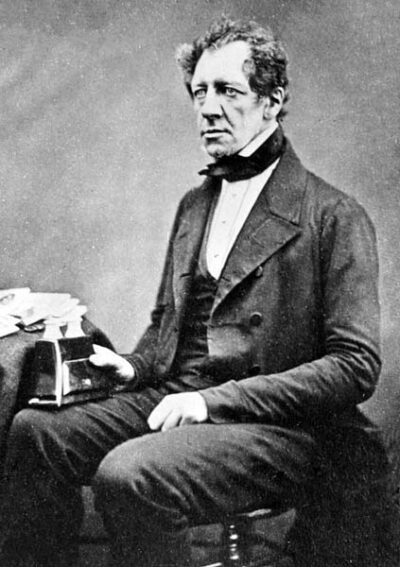
Francis Walker
Francis Walker was an English entomologist. Born July 31, 1809, in Southgate. Died October 5, 1874, in Wanstead. Known for Monographia Chalciditum and Insecta Britannica Diptera. Awards include Fellow of the Royal Entomological Society.
Facts
14 facts · 2 confirmed by two sources · 4 cited · 8 from one source
Where this comes from
Papalocal keeps its own record. It started from these sources; what each one said is kept here as it was copied, so a change on their side never changes this page by itself. Tap one to read its version.
What Wikidata says · copied November 18, 2026 · revision 2567807613
- Described as
- English entomologist (1809–1874)
- Other names
- Walker, F.Walker
- Born
- July 31, 1809 · 1 reference
- Died
- October 5, 1874 · 1 reference
- Born in
- Southgate · 1 reference
- Died in
- Wanstead
- Citizen of
- United Kingdom of Great Britain and Ireland
- Occupation
- entomologist · 1 reference; scientific collector · 1 reference
- Worked for
- British Museum (1837–1873); Entomological Magazine (1834–)
- Member of
- Royal Entomological Society (1833–) · 1 reference
- Known for
- Monographia Chalciditum; Insecta Britannica Diptera
- Awards
- Fellow of the Royal Entomological Society
- Field
- entomology
- Wikipedias with a page
- 20
Wikidata item Q2095814 (wikidata.org/wiki/Q2095814), public domain (CC0). Copied November 18, 2026.
What Wikipedia says · copied November 18, 2026 · revision 1365168974
Francis Walker (31 July 1809 – 5 October 1874) was an English entomologist. He was born in Southgate, London, on 31 July 1809 and died at Wanstead, England on 5 October 1874. He was one of the most prolific authors in entomology, and stirred controversy during his later life as his publications resulted in a huge number of junior synonyms. However, his assiduous work on the collections of the British Museum had great significance.
Between June 1848 and late 1873 Walker was contracted by John Edward Gray Director of the British Museum to catalogue their insects (except Coleoptera) that is Orthoptera, Neuroptera, Hemiptera, Diptera, Lepidoptera and Hymenoptera. Walker largely accomplished this and (Edwards, 1870) wrote of the plan and by implication those who implemented it: It is to him [Gray] that the Public owe the admirable helps to the study of natural history which have been afforded by the series of inventories, guides, and nomenclatures, the publication of which began, at his instance, in the year 1844, and has been unceasingly pursued. A mere list of the various printed synopses which have grown out of Dr. Gray's suggestion of 1844 would fill many such pages as that which the reader has now before him. The consequence is, that in no department of the Museum can the student, as yet, economise his time as he can economise it in the Natural-History Department. Printed, not Manuscript, Catalogues mean time saved; disappointment avoided; study fructified. No literary labour brings so little of credit as does the work of the Catalogue-maker. None better deserves the gratitude of scholars, as well as of the general mass of visitors. As a result of the catalogues an immense amount of material was added to the collections.
Collaborating with Alexander Henry Haliday, a lifelong friend, he was one of the first students of the Chalcidoidea. He was also a close friend of John Curtis. Walker was a member of the Entomological Society. Walker's specimens are in the Natural History Museum, London; Hope Department of Entomology, University of Oxford; the National Museum of Ireland, Dublin; Zoologische Staatssammlung München and the School of Medicine, Cairo, Egypt.
- Born, in its opening lines
- July 31, 1809
- Died, in its opening lines
- October 5, 1874
From the Wikipedia article “Francis Walker (entomologist)” (en.wikipedia.org/wiki/Francis_Walker_(entomologist)), by its contributors, under CC BY-SA 4.0 (creativecommons.org/licenses/by-sa/4.0/). Copied November 18, 2026; not changed.
Confirmed Two sources agree. Cited One source, and it names where it got it. One source One source, without a reference of its own. Sources disagree The sources disagree. We show the best-supported value and keep theirs below.
