
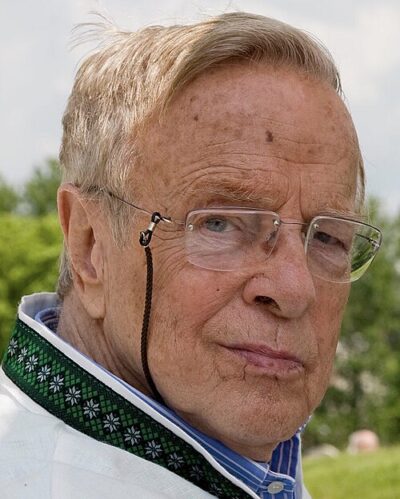
Franco Zeffirelli
Franco Zeffirelli was an Italian director and politician. Born February 12, 1923, in Florence. Died June 15, 2019, in Rome. Positions held include member of the Senate of the Italian Republic (1994–2001). Educated at University of Florence. Awards include Knight Commander of the Order of the British Empire, Commandeur des Arts et des Lettres and David di Donatello for Best Director (2 times).
Facts
36 facts · 2 confirmed by two sources · 12 cited · 22 from one source
Where this comes from
Papalocal keeps its own record. It started from these sources; what each one said is kept here as it was copied, so a change on their side never changes this page by itself. Tap one to read its version.
What Wikidata says · copied November 16, 2026 · revision 2569008524
- Described as
- Italian director and politician (1923-2019)
- Other names
- Gianfranco Corsi, Gian Franco Corsi Zeffirelli
- Born
- February 12, 1923 · 12 references
- Died
- June 15, 2019 · 9 references
- Born in
- Florence · 4 references
- Died in
- Rome · 3 references
- Buried in
- Cimitero delle Porte Sante
- Cause of death
- disease
- Name at birth
- Gian Franco Corsi Zeffirelli
- Citizen of
- Italy
- Occupation
- theatre director · 1 reference; film director · 3 references; screenwriter · 1 reference; politician · 2 references; film producer; actor · 2 references; librettist; television producer · 1 reference
- Positions held
- member of the Senate of the Italian Republic (1994–2001) · 1 reference
- Political party
- Forza Italia; Christian Democracy
- Education
- University of Florence
- Member of
- Accademia delle Arti del Disegno
- Awards
- Knight Commander of the Order of the British Empire (2004) · 1 reference; Commandeur des Arts et des Lettres (1995) · 1 reference; David di Donatello for Best Director (2 times) (1969, 1972); Nastro d'Argento for the director of the best film (1969); National Board of Review Award for Best Director (1968); Christopher Award; Grand Officer of the Order of Merit of the Italian Republic; Gold Medal of the Italian Order of Merit for Culture and Art; Primetime Emmy Award for Outstanding Directing for a Variety Special; Primetime Emmy Award for Individual Performance in a Variety or Music Program
- Field
- directing · 1 reference; film direction · 1 reference
- Religion
- Catholic Church
- Lived in
- Rome
- Website
- http://www.francozeffirelli.it · 1 reference
- Wikipedias with a page
- 59
Wikidata item Q53040 (wikidata.org/wiki/Q53040), public domain (CC0). Copied November 16, 2026.
What Wikipedia says · copied November 16, 2026 · revision 1379806972
Gian Franco Corsi Zeffirelli (Italian pronunciation: [ˈfraŋko ddzeffiˈrɛlli]; 12 February 1923 – 15 June 2019) was an Italian stage and film director, producer, production designer and politician. He was one of the most significant opera and theatre directors of the post–World War II era, gaining both acclaim and notoriety for his lavish stagings of classical works, as well as his film adaptations of the same.
Films he directed included the Shakespearean adaptations The Taming of the Shrew (1967), starring Elizabeth Taylor and Richard Burton; Romeo and Juliet (1968), for which he received a nomination for the Academy Award for Best Director; and Hamlet (1990), starring Mel Gibson and Glenn Close. His Biblical television miniseries Jesus of Nazareth (1977) won both national and international acclaim and is still frequently shown at Christmas and Easter in many countries.
A member of the Forza Italia party, he served as the Senator for Catania between 1994 and 2001.
A Grand Officer of the Order of Merit of the Italian Republic since 1977, Zeffirelli also received an honorary British knighthood in 2004. Zeffirelli was awarded the Premio Colosseo in 2009 by the city of Rome.
- Born, in its opening lines
- February 12, 1923
- Died, in its opening lines
- June 15, 2019
From the Wikipedia article “Franco Zeffirelli” (en.wikipedia.org/wiki/Franco_Zeffirelli), by its contributors, under CC BY-SA 4.0 (creativecommons.org/licenses/by-sa/4.0/). Copied November 16, 2026; not changed.
Confirmed Two sources agree. Cited One source, and it names where it got it. One source One source, without a reference of its own. Sources disagree The sources disagree. We show the best-supported value and keep theirs below.
