
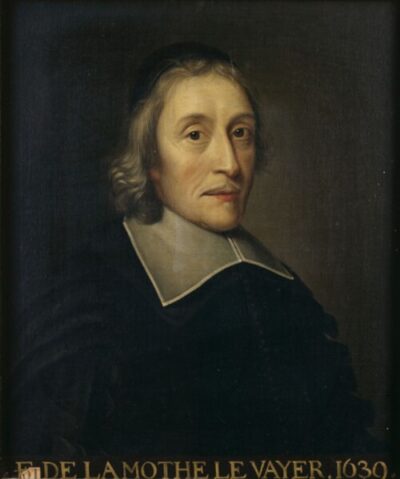
François de La Mothe Le Vayer
François de La Mothe Le Vayer was a French philosopher and writer. Born August 1, 1588, in Paris. Died May 9, 1672, in Paris. Positions held include Member of the Académie française (1639–1672) and substitute attorney general (1625–). Known for Dialogues. Educated at University of Poitiers.
Facts
13 facts · 2 confirmed by two sources · 5 cited · 6 from one source
Where this comes from
Papalocal keeps its own record. It started from these sources; what each one said is kept here as it was copied, so a change on their side never changes this page by itself. Tap one to read its version.
What Wikidata says · copied November 18, 2026 · revision 2567379173
- Described as
- French philosopher and writer (1588–1672)
- Other names
- Orosius Tubero
- Born
- August 1, 1588 · 1 reference
- Died
- May 9, 1672 · 2 references
- Born in
- Paris
- Died in
- Paris
- Citizen of
- France · 1 reference
- Occupation
- philosopher · 1 reference; writer · 1 reference
- Positions held
- Member of the Académie française (1639–1672) · 1 reference; substitute attorney general (1625–)
- Education
- University of Poitiers
- Member of
- Académie Française (1639–1672) · 1 reference
- Known for
- Dialogues
- Children
- François de La Mothe Le Vayer
- Wikipedias with a page
- 23
Wikidata item Q1451251 (wikidata.org/wiki/Q1451251), public domain (CC0). Copied November 18, 2026.
What Wikipedia says · copied November 18, 2026 · revision 1349302813
François de La Mothe Le Vayer (French: [də la mɔt lə veje], August 1588 – 9 May 1672), was a French writer who was known to use the pseudonym Orosius Tubero. He was admitted to the Académie française in 1639, and was the tutor of Louis XIV.
- Born, in its opening lines
- August 1588
- Died, in its opening lines
- May 9, 1672
From the Wikipedia article “François de La Mothe Le Vayer” (en.wikipedia.org/wiki/François_de_La_Mothe_Le_Vayer), by its contributors, under CC BY-SA 4.0 (creativecommons.org/licenses/by-sa/4.0/). Copied November 18, 2026; not changed.
Confirmed Two sources agree. Cited One source, and it names where it got it. One source One source, without a reference of its own. Sources disagree The sources disagree. We show the best-supported value and keep theirs below.
