
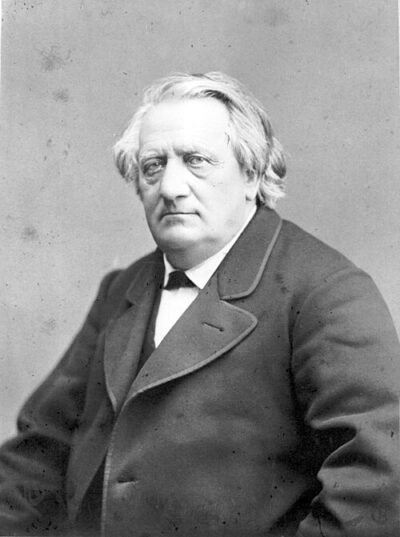
Franz Lachner
Franz Lachner was a German composer and conductor. Born April 2, 1803, in Rain. Died January 20, 1890, in Munich. Positions held include chapelmaster. Awards include honorary citizen of Munich and Bavarian Maximilian Order for Science and Art.
Facts
22 facts · 2 confirmed by two sources · 6 cited · 14 from one source
Where this comes from
Papalocal keeps its own record. It started from these sources; what each one said is kept here as it was copied, so a change on their side never changes this page by itself. Tap one to read its version.
What Wikidata says · copied November 17, 2026 · revision 2568754572
- Described as
- German composer and conductor (1803-1890)
- Other names
- Franz Paul Lachner
- Born
- April 2, 1803 · 7 references
- Died
- January 20, 1890 · 7 references
- Born in
- Rain · 3 references
- Died in
- Munich · 2 references
- Buried in
- Alter Südfriedhof
- Citizen of
- German Reich
- Occupation
- conductor · 1 reference; composer · 1 reference; librettist
- Positions held
- chapelmaster
- Worked for
- Bavarian State Opera
- Member of
- AGV München · 1 reference
- Genre
- opera; symphony
- Instrument
- organ
- Awards
- honorary citizen of Munich; Bavarian Maximilian Order for Science and Art (1853)
- Father
- Anton Lachner · 1 reference
- Siblings
- Ignaz Lachner · 1 reference; Vinzenz Lachner · 1 reference; Theodor Lachner · 1 reference; Thekla Lachner · 1 reference
- Wikipedias with a page
- 24
Wikidata item Q713451 (wikidata.org/wiki/Q713451), public domain (CC0). Copied November 17, 2026.
What Wikipedia says · copied November 17, 2026 · revision 1378885833
Franz Paul Lachner (2 April 1803 – 20 January 1890) was a German composer and conductor.
- Born, in its opening lines
- April 2, 1803
- Died, in its opening lines
- January 20, 1890
From the Wikipedia article “Franz Lachner” (en.wikipedia.org/wiki/Franz_Lachner), by its contributors, under CC BY-SA 4.0 (creativecommons.org/licenses/by-sa/4.0/). Copied November 17, 2026; not changed.
Confirmed Two sources agree. Cited One source, and it names where it got it. One source One source, without a reference of its own. Sources disagree The sources disagree. We show the best-supported value and keep theirs below.
