
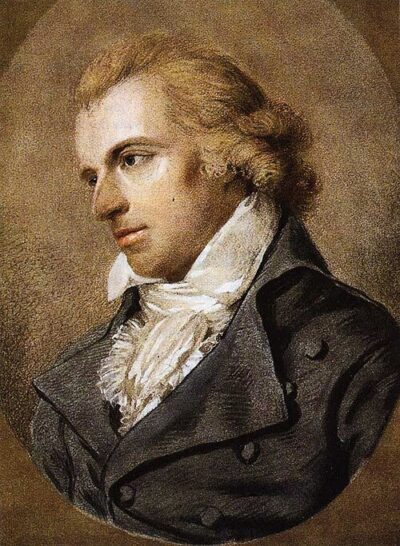
Friedrich Schiller
Friedrich Schiller was a German playwright, poet, philosopher and historian. Born November 10, 1759, in Marbach am Neckar. Died May 9, 1805, in Weimar. Known for The Robbers, Don Carlos and Wallenstein. Educated at Karlsschule Stuttgart and University of Jena.
Facts
46 facts · 2 confirmed by two sources · 16 cited · 27 from one source · 1 where the sources disagree
What’s different
- Buried in: we show Jacobsfriedhof Weimar (Sources disagree). Wikidata also lists Weimarer Fürstengruft
Where this comes from
Papalocal keeps its own record. It started from these sources; what each one said is kept here as it was copied, so a change on their side never changes this page by itself. Tap one to read its version.
What Wikidata says · copied November 16, 2026 · revision 2570087975
- Described as
- German playwright, poet, philosopher and historian (1759–1805)
- Other names
- Joh. Christoph Friedrich von Schiller, Hsi-le, Frederick Schiller, Johann Christian Friedrich von Schiller, Friedrich von Schiller, Schillerean, Johann Christoph Friedrich Schiller, Schiller, Johann C. F. Schiller, Fridrikh Shiler, F. Shiller, Frideriko Schiller
- Born
- November 10, 1759 · 25 references
- Died
- May 9, 1805 · 25 references
- Born in
- Marbach am Neckar · 7 references
- Died in
- Weimar · 7 references
- Buried in
- Jacobsfriedhof Weimar; Weimarer Fürstengruft
- Cause of death
- tuberculosis · 1 reference
- Name at birth
- Johann Christoph Friedrich Schiller · 1 reference
- Citizen of
- Duchy of Württemberg; Duchy of Saxe-Weimar
- Occupation
- poet · 4 references; philosopher · 1 reference; historian · 3 references; librarian; physician writer; playwright · 3 references; novelist; university teacher · 2 references
- Worked for
- University of Jena
- Education
- Karlsschule Stuttgart; University of Jena
- Member of
- Academy of Science for Public Utility; Royal Swedish Academy of Letters, History and Antiquities
- Genre
- ballad
- Known for
- The Robbers; Don Carlos; Wallenstein; Mary Stuart; William Tell; Intrigue and Love; On the Aesthetic Education of Man; Die Huldigung der Künste; The Maid of Orleans
- Field
- poetry · 1 reference; theatre; philosophy; history; literature · 1 reference
- Spouse
- Charlotte von Lengefeld · 2 references
- Children
- Emilie von Gleichen-Rußwurm · 1 reference; Ernst von Schiller · 1 reference; Karl von Schiller · 1 reference; Caroline Junot · 1 reference
- Father
- Johann Kaspar Schiller · 1 reference
- Mother
- Elisabeth Dorothea Schiller · 1 reference
- Siblings
- Christophine Reinwald · 1 reference
- Religion
- Lutheranism
- Wikipedias with a page
- 183
Wikidata item Q22670 (wikidata.org/wiki/Q22670), public domain (CC0). Copied November 16, 2026.
What Wikipedia says · copied November 16, 2026 · revision 1385879505
Johann Christoph Friedrich von Schiller (German: [ˈjoːhan ˈkʁɪstɔf ˈfʁiːdʁɪç fɔn ˈʃɪlɐ], short: [ˈfʁiːdʁɪç ˈʃɪlɐ] ; 10 November 1759 – 9 May 1805) was a German playwright, poet, philosopher and historian. Schiller is considered to be one of Germany's most important classical playwrights. He was one of the most important figures of the Sturm und Drang movement.
He was born in Marbach to a devoutly Lutheran family. Initially intended for the priesthood, in 1773 he entered a military academy in Stuttgart and ended up studying medicine. His first play, The Robbers, was written at this time and proved very successful. After a brief stint as a regimental doctor, he left Stuttgart and eventually wound up in Weimar. In 1789, he became professor of History and Philosophy at the University of Jena, where he wrote historical works.
During the last seventeen years of his life (1788–1805), Schiller developed a productive, if complicated, friendship with the already famous and influential Johann Wolfgang von Goethe. They frequently discussed issues concerning aesthetics, and Schiller encouraged Goethe to finish works that he had left as sketches. This relationship and these discussions led to a period now referred to as Weimar Classicism. Together, they founded the Weimar Theater.
They also worked together on Xenien, a collection of short satirical poems in which both Schiller and Goethe challenge opponents of their philosophical vision.
- Born, in its opening lines
- November 10, 1759
- Died, in its opening lines
- May 9, 1805
From the Wikipedia article “Friedrich Schiller” (en.wikipedia.org/wiki/Friedrich_Schiller), by its contributors, under CC BY-SA 4.0 (creativecommons.org/licenses/by-sa/4.0/). Copied November 16, 2026; not changed.
Confirmed Two sources agree. Cited One source, and it names where it got it. One source One source, without a reference of its own. Sources disagree The sources disagree. We show the best-supported value and keep theirs below.
