
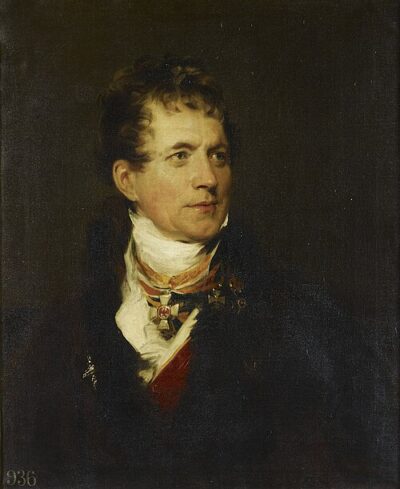
Friedrich von Gentz
Friedrich von Gentz was a German politician. Born May 2, 1764, in Wrocław. Died June 9, 1832, in Vienna. Educated at University of Königsberg and Joachimsthalsches Gymnasium.
Facts
15 facts · 2 confirmed by two sources · 7 cited · 6 from one source
Where this comes from
Papalocal keeps its own record. It started from these sources; what each one said is kept here as it was copied, so a change on their side never changes this page by itself. Tap one to read its version.
What Wikidata says · copied November 18, 2026 · revision 2568868534
- Described as
- German politician (1764-1832)
- Other names
- Frederick, Baron von Gentz
- Born
- May 2, 1764 · 7 references
- Died
- June 9, 1832 · 7 references
- Born in
- Wrocław · 1 reference
- Died in
- Vienna · 1 reference
- Citizen of
- Kingdom of Prussia
- Occupation
- politician · 1 reference; writer · 2 references; philosopher · 1 reference
- Worked for
- Klemens von Metternich
- Education
- University of Königsberg; Joachimsthalsches Gymnasium
- Field
- politics · 1 reference
- Children
- Auguste Spengler
- Father
- Johann Friedrich Gentz · 1 reference
- Siblings
- Heinrich Gentz · 1 reference
- Wikipedias with a page
- 22
Wikidata item Q77476 (wikidata.org/wiki/Q77476), public domain (CC0). Copied November 18, 2026.
What Wikipedia says · copied November 18, 2026 · revision 1381734713
Friedrich von Gentz (2 May 1764 – 9 June 1832) was a Prussian-Austrian diplomat and a writer. With Austrian chancellor Klemens von Metternich he was one of the main forces behind the organisation, management and protocol of the Congress of Vienna.
- Born, in its opening lines
- May 2, 1764
- Died, in its opening lines
- June 9, 1832
From the Wikipedia article “Friedrich von Gentz” (en.wikipedia.org/wiki/Friedrich_von_Gentz), by its contributors, under CC BY-SA 4.0 (creativecommons.org/licenses/by-sa/4.0/). Copied November 18, 2026; not changed.
Confirmed Two sources agree. Cited One source, and it names where it got it. One source One source, without a reference of its own. Sources disagree The sources disagree. We show the best-supported value and keep theirs below.
