
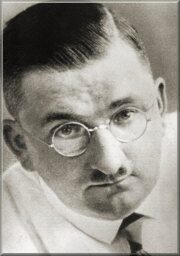
Fritz Gerlich
Fritz Gerlich was a German historian and journalist. Born February 15, 1883, in Szczecin. Died June 30, 1934, in Dachau concentration camp. Educated at LMU Munich.
Facts
15 facts · 2 confirmed by two sources · 7 cited · 6 from one source
Where this comes from
Papalocal keeps its own record. It started from these sources; what each one said is kept here as it was copied, so a change on their side never changes this page by itself. Tap one to read its version.
What Wikidata says · copied November 17, 2026 · revision 2568955976
- Described as
- German historian and journalist (1883–1934)
- Other names
- Carl Albert Fritz Michael Gerlich
- Born
- February 15, 1883 · 2 references
- Died
- June 30, 1934 · 1 reference
- Born in
- Szczecin · 1 reference
- Died in
- Dachau concentration camp · 1 reference
- Citizen of
- Germany
- Occupation
- journalist · 1 reference; archivist; writer; resistance fighter · 1 reference; historian · 2 references; opinion journalist · 1 reference
- Political party
- German Fatherland Party
- Education
- LMU Munich
- Member of
- Konnersreuther Kreis · 1 reference
- Religion
- Catholic Church
- Wikipedias with a page
- 24
Wikidata item Q61114 (wikidata.org/wiki/Q61114), public domain (CC0). Copied November 17, 2026.
What Wikipedia says · copied November 17, 2026 · revision 1380390993
Carl Albert Fritz Michael Gerlich (15 February 1883 – 30 June 1934) was a German journalist and historian, and one of the leading journalistic resistors of Adolf Hitler. He was arrested and later fatally shot and cremated at the Dachau concentration camp during the Night of the Long Knives.
The cause for his canonization commenced on 16 December 2017 and he is now referred to as a Servant of God.
- Born, in its opening lines
- February 15, 1883
- Died, in its opening lines
- June 30, 1934
From the Wikipedia article “Fritz Gerlich” (en.wikipedia.org/wiki/Fritz_Gerlich), by its contributors, under CC BY-SA 4.0 (creativecommons.org/licenses/by-sa/4.0/). Copied November 17, 2026; not changed.
Confirmed Two sources agree. Cited One source, and it names where it got it. One source One source, without a reference of its own. Sources disagree The sources disagree. We show the best-supported value and keep theirs below.
