
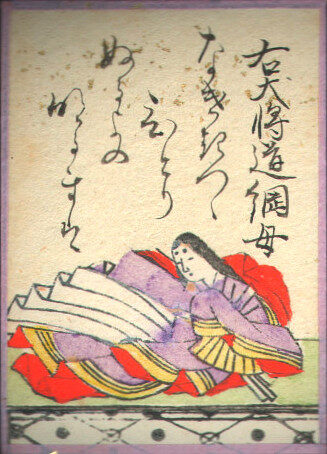
Fujiwara no Michitsuna no Haha was the 10th-century Japanese poet. Born 935, in Japan. Died June 2, 995. Known for Kagerō Nikki.
Facts
12 facts · 2 confirmed by two sources · 0 cited · 10 from one source
What’s different
- Born: we show 935 (Confirmed). Wikidata also lists 936
Where this comes from
Papalocal keeps its own record. It started from these sources; what each one said is kept here as it was copied, so a change on their side never changes this page by itself. Tap one to read its version.
What Wikidata says · copied November 18, 2026 · revision 2551755638
- Described as
- 10th-century Japanese poet
- Other names
- Michitsuna no Haha, Udaishō Michitsuna no Haha, Michitsuna's mother, mother of Michitsuna
- Born
- 935; 936
- Died
- June 2, 995
- Born in
- Japan
- Citizen of
- Japan
- Occupation
- poet; diarist; writer
- Known for
- Kagerō Nikki
- Field
- poetry
- Spouse
- Fujiwara no Kaneie
- Children
- Fujiwara no Michitsuna
- Father
- Fujiwara no Tomoyasu
- Wikipedias with a page
- 20
Wikidata item Q439829 (wikidata.org/wiki/Q439829), public domain (CC0). Copied November 18, 2026.
What Wikipedia says · copied November 18, 2026 · revision 1358351136
Fujiwara no Michitsuna no Haha (藤原道綱母, c. 935–995) was a waka poet in the Mid Heian period. She was in her mid-thirties when she began to write her journal Kagerō Nikki, written in a combination of waka poems and prose. Her diary gave access to a woman's experience of a thousand years ago, with poems she recorded which vividly recall the past. These poems conveyed the life of a noblewoman during the Heian Period. She is one of the Nihon Sandai Bijin (The Three Beauties of Japan). Her true name is unknown to history.
- Born, in its opening lines
- 935
- Died, in its opening lines
- 995
From the Wikipedia article “Michitsuna's mother” (en.wikipedia.org/wiki/Michitsuna's_mother), by its contributors, under CC BY-SA 4.0 (creativecommons.org/licenses/by-sa/4.0/). Copied November 18, 2026; not changed.
Confirmed Two sources agree. Cited One source, and it names where it got it. One source One source, without a reference of its own. Sources disagree The sources disagree. We show the best-supported value and keep theirs below.
