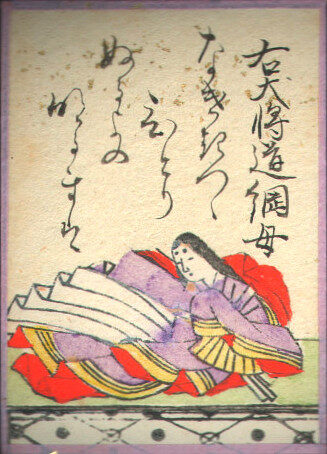
Kagerō Nikki
Kagerō Nikki is a diary and a work of classical Japanese literature. It came out in 974. It was written by Fujiwara no Michitsuna no Haha.
- Published
- 974
- Came out
- 974
- Written by
- Fujiwara no Michitsuna no Haha
- Genre
- nikki bungaku
- Country of origin
- Japan
All 8 facts, and where they come from
Facts
8 facts · 0 confirmed by two sources · 0 cited · 8 from one source
Where this comes from
Papalocal keeps its own record. It started from these sources; what each one said is kept here as it was copied, so a change on their side never changes this page by itself. Tap one to read its version.
What Wikidata says · copied November 19, 2026 · revision 2515927406
- Described as
- diary and a work of classical Japanese literature
- Other names
- Kagerou Nikki, Kagero Nikki, The Mayfly Diary, The Gossamer Years, Kagerō no nikki
- What it is
- literary work; diary
- Written by
- Fujiwara no Michitsuna no Haha
- Genre
- nikki bungaku
- Published
- 974
- Language
- Japanese
- Country of origin
- Japan
- Came out
- 974
- Wikipedias with a page
- 8
Wikidata item Q3005729 (wikidata.org/wiki/Q3005729), public domain (CC0). Copied 2026-11-19.
What Wikipedia says · copied November 19, 2026 · revision 1381414667
Kagerō Nikki (蜻蛉日記; The Mayfly Diary, commonly referred to as The Gossamer Years) is a work of classical Japanese literature, written around 974, that falls under the genre of nikki bungaku, or diary literature. The author of Kagerō Nikki was a woman known only as the Mother of Michitsuna. Using a combination of waka poems and prose, she conveys the life of a noblewoman during the Heian period.
In English Kagerō Nikki is often called The Gossamer Years, which is the title given to the first English translation by Edward Seidensticker. The term kagerō has three possible meanings: it may mean a mayfly; a heat wave; or a thin film of cobweb, which is the meaning proposed by the English Orientalist Arthur Waley.
From the Wikipedia article “Kagerō Nikki” (en.wikipedia.org/wiki/Kagerō_Nikki), by its contributors, under CC BY-SA 4.0 (creativecommons.org/licenses/by-sa/4.0/). Copied 2026-11-19; not changed.
Confirmed Two sources agree. Cited One source, and it names where it got it. One source One source, without a reference of its own. Sources disagree The sources disagree. We show the best-supported value and keep theirs below.