
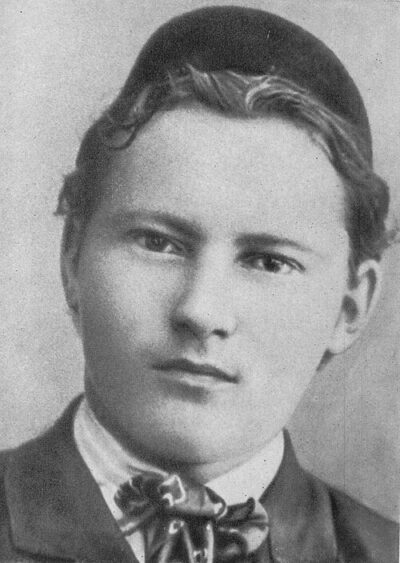
Ğabdulla Tuqay
Ğabdulla Tuqay was a Tatar poet. Born April 14, 1886, in Koshlauch. Died April 2, 1913, in Klyachkin clinics.
Facts
15 facts · 0 confirmed by two sources · 4 cited · 9 from one source · 2 where the sources disagree
What’s different
- Born: we show April 14, 1886 (Sources disagree). Wikipedia says April 26, 1886
- Died: we show April 2, 1913 (Sources disagree). Wikipedia says April 15, 1913
Where this comes from
Papalocal keeps its own record. It started from these sources; what each one said is kept here as it was copied, so a change on their side never changes this page by itself. Tap one to read its version.
What Wikidata says · copied November 16, 2026 · revision 2565601463
- Described as
- Tatar poet
- Other names
- Ğabdulla Möxämmätğärif ulı Tuqay, Gabdulla Tukay
- Born
- April 14, 1886
- Died
- April 2, 1913
- Born in
- Koshlauch · 1 reference
- Died in
- Klyachkin clinics · 1 reference
- Buried in
- Yaña Bistä cemetery
- Cause of death
- tuberculosis
- Citizen of
- Russian Empire
- Occupation
- poet; writer · 1 reference; literary critic; translator; opinion journalist · 1 reference; public figure · 1 reference
- Religion
- Islam
- Lived in
- Bulgar hotel (–1912) · 1 reference
- Wikipedias with a page
- 47
Wikidata item Q315279 (wikidata.org/wiki/Q315279), public domain (CC0). Copied November 16, 2026.
What Wikipedia says · copied November 16, 2026 · revision 1384059741
Ğabdulla Möxəmmətğərif ulı Tuqay (26 April [O.S. 14 April] 1886 – 15 April [O.S. 2 April] 1913) was a Tatar poet, critic, publisher, and prominent contributor to Tatar literature. Tuqay is often referred to as the founder of modern Tatar literature and the modern Tatar literary language, which replaced Old Tatar.
- Born, in its opening lines
- April 26, 1886
- Died, in its opening lines
- April 15, 1913
From the Wikipedia article “Gabdulla Tukay” (en.wikipedia.org/wiki/Gabdulla_Tukay), by its contributors, under CC BY-SA 4.0 (creativecommons.org/licenses/by-sa/4.0/). Copied November 16, 2026; not changed.
Confirmed Two sources agree. Cited One source, and it names where it got it. One source One source, without a reference of its own. Sources disagree The sources disagree. We show the best-supported value and keep theirs below.
