
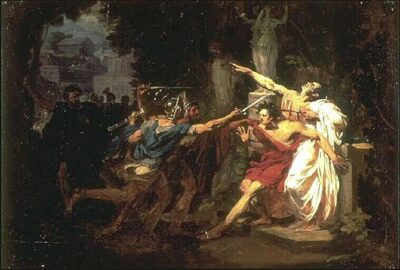
Gaius Gracchus
Gaius Gracchus was an ancient Roman politician. Born 154 BC. Died 121 BC, in Rome. Positions held include tribune of the plebs (-123–-122), ancient Roman senator (–-121) and military tribune (-134–-133).
Facts
21 facts · 0 confirmed by two sources · 9 cited · 12 from one source
Where this comes from
Papalocal keeps its own record. It started from these sources; what each one said is kept here as it was copied, so a change on their side never changes this page by itself. Tap one to read its version.
What Wikidata says · copied November 16, 2026 · revision 2564846632
- Described as
- ancient Roman politician
- Other names
- Gaius Sempronius Gracchus, Caius Sempronius Gracchus
- Born
- 154 BC · 1 reference
- Died
- 121 BC · 2 references
- Died in
- Rome
- Citizen of
- Ancient Rome
- Occupation
- politician; military personnel
- Positions held
- tribune of the plebs (-123–-122); ancient Roman senator (–-121); military tribune (-134–-133); triumvir agris dandis assignandis (-133–-121); quaestor (-126); triumvir coloniis deducendis (-121)
- Political party
- populares
- Member of
- Gracchi
- Spouse
- Licinia · 2 references
- Children
- Sempronius Gracchus · 2 references; Sempronia · 2 references
- Father
- Tiberius Sempronius Gracchus · 2 references
- Mother
- Cornelia · 2 references
- Siblings
- Tiberius Gracchus · 2 references; Sempronia · 2 references
- Wikipedias with a page
- 47
Wikidata item Q297183 (wikidata.org/wiki/Q297183), public domain (CC0). Copied November 16, 2026.
What Wikipedia says · copied November 16, 2026 · revision 1378035155
Gaius Sempronius Gracchus (c. 154 BC – 121 BC) was a reformist Roman politician and soldier who lived during the 2nd century BC. He is best known for his plebeian tribunates in 123 and 122 BC, during which he proposed a wide set of laws, including laws to establish colonies outside of Italy, engage in further land reform, reform the judicial system and system for provincial assignments, and create a subsidised grain supply for Rome.
The year after his tribunate of 122 BC, he and his political allies were implicated in political unrest and the armed occupation of the Aventine Hill at Rome. His political enemies used this unrest to declare martial law and march on his supporters, leading to his death either by suicide or in battle. After his death, his political allies were convicted in a series of trials, but most of his legislation was undisturbed.
His brother was the reformer Tiberius Sempronius Gracchus who was plebeian tribune in 133 BC and was also killed in political unrest that year. They were the sons of the Gracchus who was consul in 177 and 163 BC. The two brothers, known together as the Gracchi brothers, are often associated due to Gaius' own political self-representation and its transmission to contemporary times in Plutarch's Parallel Lives. The extent to which the two brothers should be associated and viewed as successors is disputed by modern scholars.
From the Wikipedia article “Gaius Gracchus” (en.wikipedia.org/wiki/Gaius_Gracchus), by its contributors, under CC BY-SA 4.0 (creativecommons.org/licenses/by-sa/4.0/). Copied November 16, 2026; not changed.
Confirmed Two sources agree. Cited One source, and it names where it got it. One source One source, without a reference of its own. Sources disagree The sources disagree. We show the best-supported value and keep theirs below.
