
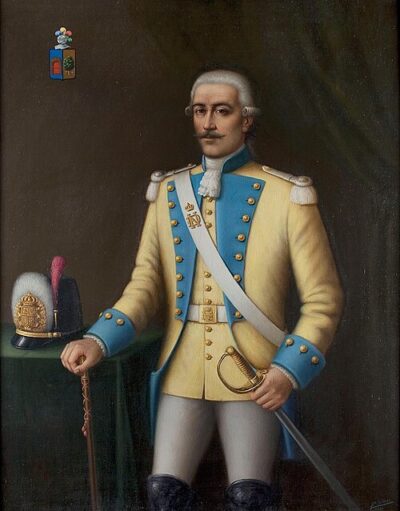
Gaspar de Portolà
Gaspar de Portolà was an explorer and soldier in New Spain. Born 1716, in Os de Balaguer. Died October 10, 1786, in Lleida. Positions held include commanding officer (1769–1770) and governor (1768–1770).
Facts
12 facts · 0 confirmed by two sources · 6 cited · 6 from one source
Where this comes from
Papalocal keeps its own record. It started from these sources; what each one said is kept here as it was copied, so a change on their side never changes this page by itself. Tap one to read its version.
What Wikidata says · copied November 16, 2026 · revision 2567077728
- Described as
- explorer and soldier in New Spain
- Other names
- Gaspar de Portola de Rovira, Gaspar de Portolá de Rovira, Gaspar de Portola
- Born
- 1716
- Died
- October 10, 1786 · 1 reference
- Born in
- Os de Balaguer · 1 reference
- Died in
- Lleida · 1 reference
- Citizen of
- Spain
- Occupation
- explorer; military personnel; governor · 1 reference; discoverer · 1 reference; soldier · 1 reference
- Positions held
- commanding officer (1769–1770); governor (1768–1770)
- Wikipedias with a page
- 28
Wikidata item Q461023 (wikidata.org/wiki/Q461023), public domain (CC0). Copied November 16, 2026.
What Wikipedia says · copied November 16, 2026 · revision 1371470198
Don Gaspar de Portolá y Rovira (Spanish pronunciation: [ɡasˈpaɾ ðe poɾtoˈla i roˈβiɾa] gas-PAR de por-to-LA i ro-BI-ra) was a Spanish Army officer and colonial administrator who served as the first governor of the Californias from 1767 to 1770. Born in Catalonia into an aristocratic family, he is best known for leading the Portolá expedition into California, which laid the foundations of Spanish rule in the region Californian cities like San Diego and Monterey, and bestowed names to geographic features throughout California, many of which are still in use.
From the Wikipedia article “Gaspar de Portolá” (en.wikipedia.org/wiki/Gaspar_de_Portolá), by its contributors, under CC BY-SA 4.0 (creativecommons.org/licenses/by-sa/4.0/). Copied November 16, 2026; not changed.
Confirmed Two sources agree. Cited One source, and it names where it got it. One source One source, without a reference of its own. Sources disagree The sources disagree. We show the best-supported value and keep theirs below.
