
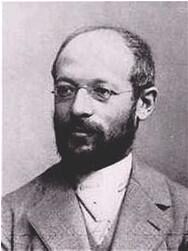
Georg Simmel
Georg Simmel was a German sociologist, philosopher, and critic. Born March 1, 1858, in Berlin. Died September 26, 1918, in Strasbourg. Known for Sociology and The Philosophy of Money. Educated at Humboldt-Universität zu Berlin.
Facts
21 facts · 1 confirmed by two sources · 7 cited · 12 from one source · 1 where the sources disagree
What’s different
- Died: we show September 26, 1918 (Sources disagree). Wikipedia says October 26, 1918
Where this comes from
Papalocal keeps its own record. It started from these sources; what each one said is kept here as it was copied, so a change on their side never changes this page by itself. Tap one to read its version.
What Wikidata says · copied November 16, 2026 · revision 2568850768
- Described as
- German sociologist, philosopher, and critic (1858–1918)
- Born
- March 1, 1858 · 8 references
- Died
- September 26, 1918 · 4 references
- Born in
- Berlin · 2 references
- Died in
- Strasbourg · 1 reference
- Cause of death
- liver cancer
- Citizen of
- Kingdom of Prussia
- Occupation
- philosopher · 2 references; sociologist · 2 references; university teacher
- Worked for
- Humboldt-Universität zu Berlin
- Education
- Humboldt-Universität zu Berlin
- Known for
- Sociology; The Philosophy of Money
- Field
- philosophy; sociology of religion
- Spouse
- Gertrud Simmel · 1 reference
- Children
- Hans Simmel · 1 reference; Angela Kantorowicz · 1 reference
- Father
- Eduard Maria Simmel
- Mother
- Flora Bodstein
- Religion
- atheism
- Wikipedias with a page
- 76
Wikidata item Q76849 (wikidata.org/wiki/Q76849), public domain (CC0). Copied November 16, 2026.
What Wikipedia says · copied November 16, 2026 · revision 1384022297
Georg Simmel (; German: [ˈzɪml̩]; 1 March 1858 – 26 October 1918) was a German sociologist, philosopher, and critic. A founding figure of sociology, his neo-Kantian approach helped establish sociological antipositivism, asking "What is society?" in analogy to Kant's "What is nature?". He pioneered analyses of individuality and social fragmentation.
Simmel discussed social and cultural phenomena in terms of "forms" and "contents" with a transient relationship, wherein form becomes content, and vice versa dependent on context. In this sense, Simmel was a forerunner to structuralist styles of reasoning in the social sciences and heralded relational sociology.
In "The Metropolis and Mental Life", Simmel anticipates urban sociology, symbolic interactionism, and social network analysis. An acquaintance of Max Weber, Simmel wrote on the topic of personal character in a manner reminiscent of the sociological ideal type. He broadly rejected academic standards, however, philosophically covering topics such as emotion and romantic love. Both Simmel and Weber's nonpositivist theory informed the eclectic critical theory of the Frankfurt School.
- Born, in its opening lines
- March 1, 1858
- Died, in its opening lines
- October 26, 1918
From the Wikipedia article “Georg Simmel” (en.wikipedia.org/wiki/Georg_Simmel), by its contributors, under CC BY-SA 4.0 (creativecommons.org/licenses/by-sa/4.0/). Copied November 16, 2026; not changed.
Confirmed Two sources agree. Cited One source, and it names where it got it. One source One source, without a reference of its own. Sources disagree The sources disagree. We show the best-supported value and keep theirs below.
