
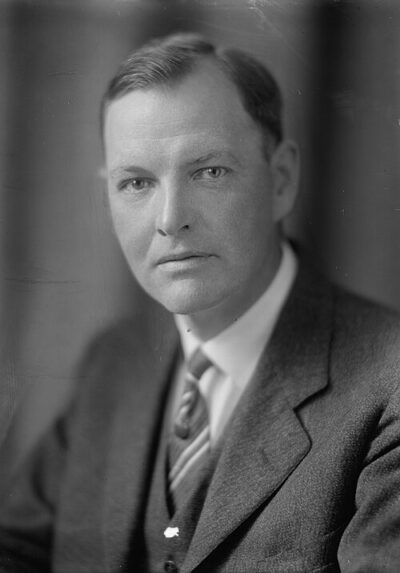
George Alexander Parks
George Alexander Parks was an American engineer and 5th Governor of Alaska Territory. Born May 29, 1883, in Denver. Died May 11, 1984, in Juneau. Positions held include Governor of the Territory of Alaska (1925–1933).
Facts
12 facts · 2 confirmed by two sources · 6 cited · 4 from one source
Where this comes from
Papalocal keeps its own record. It started from these sources; what each one said is kept here as it was copied, so a change on their side never changes this page by itself. Tap one to read its version.
What Wikidata says · copied November 20, 2026 · revision 2571872100
- Described as
- American engineer and 5th Governor of Alaska Territory (1883-1984)
- Born
- May 29, 1883 · 2 references
- Died
- May 11, 1984 · 2 references
- Born in
- Denver · 1 reference
- Died in
- Juneau · 1 reference
- Buried in
- Evergreen Cemetery · 1 reference
- Citizen of
- United States
- Occupation
- engineer; mining engineer · 1 reference; politician · 1 reference; governor · 1 reference
- Positions held
- Governor of the Territory of Alaska (1925–1933)
- Political party
- Republican Party
- Wikipedias with a page
- 8
Wikidata item Q365997 (wikidata.org/wiki/Q365997), public domain (CC0). Copied November 20, 2026.
What Wikipedia says · copied November 20, 2026 · revision 1364391323
George Alexander Parks (May 29, 1883 – May 11, 1984) was an American engineer who worked in Alaska Territory for most of his career. Following an unexpected nomination from President Calvin Coolidge, he became the territory's first resident governor. As governor, he was the first person to serve two complete four-year terms and the first chief executive to travel extensively by air.
- Born, in its opening lines
- May 29, 1883
- Died, in its opening lines
- May 11, 1984
From the Wikipedia article “George Alexander Parks” (en.wikipedia.org/wiki/George_Alexander_Parks), by its contributors, under CC BY-SA 4.0 (creativecommons.org/licenses/by-sa/4.0/). Copied November 20, 2026; not changed.
Confirmed Two sources agree. Cited One source, and it names where it got it. One source One source, without a reference of its own. Sources disagree The sources disagree. We show the best-supported value and keep theirs below.
