
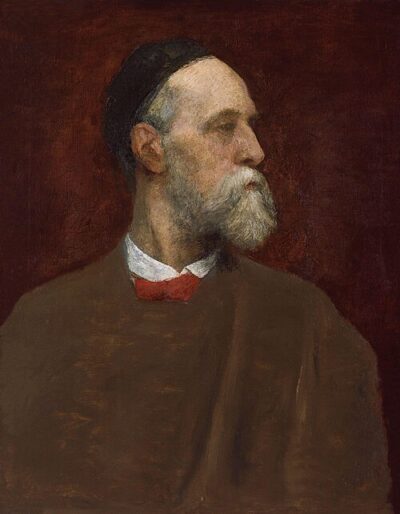
George Frederic Watts
George Frederic Watts was a British painter and sculptor. Born February 23, 1817, in London. Died July 1, 1904, in Compton. Known for Hope. Educated at Royal Academy of Arts. Awards include Order of Merit.
Facts
17 facts · 2 confirmed by two sources · 5 cited · 10 from one source
What’s different
- Died: we show July 1, 1904 (Confirmed). Wikidata also lists June 1, 1904
Where this comes from
Papalocal keeps its own record. It started from these sources; what each one said is kept here as it was copied, so a change on their side never changes this page by itself. Tap one to read its version.
What Wikidata says · copied November 16, 2026 · revision 2569929532
- Described as
- British painter and sculptor (1817–1904)
- Other names
- George Frederick Watts, George Watts, F. W. Watts, G. F. Watts, George F. Watts, Watts, G.F. Watts, Watts G. F., Watts. G. F., George Frederic Watts, OM, RA
- Born
- February 23, 1817 · 16 references
- Died
- July 1, 1904 · 15 references; June 1, 1904 · 1 reference
- Born in
- London
- Died in
- Compton
- Buried in
- Compton Village Cemetery
- Citizen of
- United Kingdom of Great Britain and Ireland
- Occupation
- painter · 1 reference; sculptor · 2 references
- Education
- Royal Academy of Arts
- Member of
- Royal Academy of Arts
- Genre
- portrait
- Known for
- Hope
- Awards
- Order of Merit · 1 reference
- Spouse
- Ellen Terry (1864–) · 3 references; Mary Fraser Tytler · 1 reference
- Father
- George Watts · 1 reference
- Military branch
- British Army
- Wikipedias with a page
- 31
Wikidata item Q183245 (wikidata.org/wiki/Q183245), public domain (CC0). Copied November 16, 2026.
What Wikipedia says · copied November 16, 2026 · revision 1375113891
George Frederic Watts (23 February 1817 – 1 July 1904) was a British painter and sculptor associated with the Symbolist movement. Watts became famous in his lifetime for his allegorical works, such as Hope and Love and Life. These paintings were intended to form part of an epic symbolic cycle called the "House of Life", in which the emotions and aspirations of life would all be represented in a universal symbolic language.
- Born, in its opening lines
- February 23, 1817
- Died, in its opening lines
- July 1, 1904
From the Wikipedia article “George Frederic Watts” (en.wikipedia.org/wiki/George_Frederic_Watts), by its contributors, under CC BY-SA 4.0 (creativecommons.org/licenses/by-sa/4.0/). Copied November 16, 2026; not changed.
Confirmed Two sources agree. Cited One source, and it names where it got it. One source One source, without a reference of its own. Sources disagree The sources disagree. We show the best-supported value and keep theirs below.
