
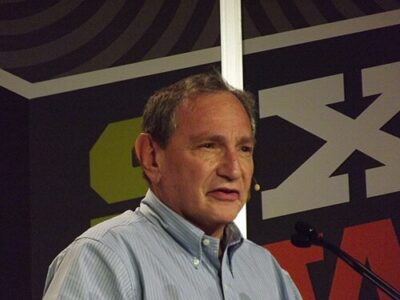
George Friedman
George Friedman is an American businessman and political scientist. Born February 1, 1949, in Budapest. Educated at City College of New York and Cornell University.
Facts
13 facts · 1 confirmed by two sources · 1 cited · 11 from one source
Where this comes from
Papalocal keeps its own record. It started from these sources; what each one said is kept here as it was copied, so a change on their side never changes this page by itself. Tap one to read its version.
What Wikidata says · copied November 15, 2026 · revision 2569493510
- Described as
- American businessman and political scientist
- Born
- February 1, 1949 · 1 reference
- Born in
- Budapest
- Citizen of
- United States
- Occupation
- geopolitical analyst; political scientist · 2 references; non-fiction writer; businessperson · 1 reference
- Political party
- Republican Party
- Worked for
- Dickinson College; Stratfor
- Education
- City College of New York; Cornell University
- Field
- international relations
- Wikipedias with a page
- 29
Wikidata item Q928281 (wikidata.org/wiki/Q928281), public domain (CC0). Copied November 15, 2026.
What Wikipedia says · copied November 15, 2026 · revision 1380513194
George Friedman (born February 1, 1949) is a Hungarian-born American futurologist, political scientist, and writer. He is a geopolitical author on international relations. He is the founder and chairman of Geopolitical Futures. Before founding Geopolitical Futures, he was chairman of the publishing company Stratfor. He is best known for his 1991 book The Coming War With Japan, co-authored with his wife Meredith LeBard, which predicted a military conflict between the United States and Japan around 2020.
- Born, in its opening lines
- February 1, 1949
From the Wikipedia article “George Friedman” (en.wikipedia.org/wiki/George_Friedman), by its contributors, under CC BY-SA 4.0 (creativecommons.org/licenses/by-sa/4.0/). Copied November 15, 2026; not changed.
Confirmed Two sources agree. Cited One source, and it names where it got it. One source One source, without a reference of its own. Sources disagree The sources disagree. We show the best-supported value and keep theirs below.
