
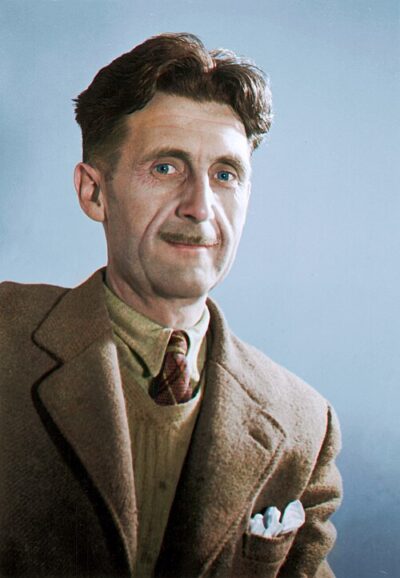
George Orwell
George Orwell was a British writer and journalist. Born June 25, 1903, in Motihari. Died January 21, 1950, in London. Known for The Road to Wigan Pier, Homage to Catalonia and Animal Farm. Educated at Eton College and Wellington College. Awards include Prometheus Award - Hall of Fame, Hugo Award for Best Novella and Retro Hugo Award for Best Novella.
Facts
54 facts · 2 confirmed by two sources · 16 cited · 35 from one source · 1 where the sources disagree
What’s different
- Name at birth: we show Eric Arthur Blair (Sources disagree). Wikidata also lists Erik Artur Bler
Where this comes from
Papalocal keeps its own record. It started from these sources; what each one said is kept here as it was copied, so a change on their side never changes this page by itself. Tap one to read its version.
What Wikidata says · copied November 16, 2026 · revision 2563461832
- Described as
- British writer and journalist (1903–1950)
- Other names
- John Freeman, Eric Blair, Orwell, P. S. Burton, Eric Arthur Blair
- Born
- June 25, 1903 · 18 references
- Died
- January 21, 1950 · 18 references
- Born in
- Motihari
- Died in
- London · 1 reference
- Buried in
- Church of All Saints cemetery
- Cause of death
- tuberculosis · 1 reference
- Name at birth
- Eric Arthur Blair · 1 reference; Erik Artur Bler · 1 reference
- Citizen of
- United Kingdom (1927–) · 1 reference; United Kingdom of Great Britain and Ireland (–1927)
- Occupation
- writer · 4 references; war correspondent; poet; essayist · 3 references; journalist · 3 references; novelist; literary critic; autobiographer
- Political party
- Independent Labour Party (1938–1940) · 1 reference
- Worked for
- British Broadcasting Corporation
- Education
- Eton College (–1921); Wellington College; St Cyprian's School (–1917)
- Member of
- Workers' Party of Marxist Unification · 1 reference
- Genre
- dystopian literature
- Known for
- The Road to Wigan Pier; Homage to Catalonia; Animal Farm; Nineteen Eighty-Four · 1 reference; Burmese Days; Coming Up for Air; Keep the Aspidistra Flying; A Clergyman's Daughter; Down and Out in Paris and London; Politics and the English Language
- Awards
- Prometheus Award - Hall of Fame; Hugo Award for Best Novella (1996); Retro Hugo Award for Best Novella (1996)
- Field
- performing arts
- Spouse
- Eileen O'Shaughnessy (1936–1945) · 1 reference; Sonia Orwell (1949–1950) · 1 reference
- Children
- Richard Blair · 2 references
- Father
- Richard Walmesley Blair · 1 reference
- Mother
- Ida Mabel Limouzin · 1 reference
- Siblings
- Marjorie Frances Blair · 1 reference; Avril Nora Blair · 1 reference
- Religion
- atheism; Anglicanism
- Military branch
- International Brigades
- Lived in
- Barnhill (1946–1950); London; Paris; France · 1 reference; British rule in Myanmar
- Height
- 1.88 m (6 ft 2 in)
- Wikipedias with a page
- 213
Wikidata item Q3335 (wikidata.org/wiki/Q3335), public domain (CC0). Copied November 16, 2026.
What Wikipedia says · copied November 16, 2026 · revision 1381183541
Eric Arthur Blair (25 June 1903 – 21 January 1950) was an English novelist, poet, essayist, journalist, and critic who wrote under the pen name of George Orwell. His work is characterised by lucid prose, social criticism, opposition to all totalitarianism (both authoritarian communism and fascism), and support of democratic socialism.
Orwell is best known for his allegorical novella Animal Farm (1945) and the dystopian novel Nineteen Eighty-Four (1949), although his works also encompass literary criticism, poetry, fiction and polemical journalism. His non-fiction works, including The Road to Wigan Pier (1937), documenting his experience of working-class life in industrial Northern England, and Homage to Catalonia (1938), an account of his experiences soldiering for the Republican faction of the Spanish Civil War (1936–1939), are as critically respected as his essays on politics, literature, language and culture.
Orwell's work remains influential in both popular and political culture, with the adjective "Orwellian"—describing totalitarian and authoritarian social practices—becoming part of the English language, as are many of his neologisms, such as "Big Brother", "Thought Police", "Room 101", "Newspeak", "memory hole", "doublethink", and "thoughtcrime". In 2008, The Times named Orwell the second-greatest British writer since 1945.
- Born, in its opening lines
- June 25, 1903
- Died, in its opening lines
- January 21, 1950
From the Wikipedia article “George Orwell” (en.wikipedia.org/wiki/George_Orwell), by its contributors, under CC BY-SA 4.0 (creativecommons.org/licenses/by-sa/4.0/). Copied November 16, 2026; not changed.
Confirmed Two sources agree. Cited One source, and it names where it got it. One source One source, without a reference of its own. Sources disagree The sources disagree. We show the best-supported value and keep theirs below.
