
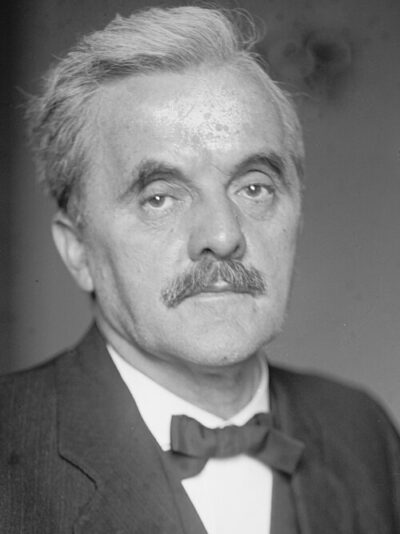
George W. Norris
George W. Norris was an American politician. Born July 11, 1861, in York Township. Died September 2, 1944, in McCook. Positions held include United States representative (1903–1913) and United States senator (1913–1943). Educated at Baldwin Wallace University and Valparaiso University.
Facts
17 facts · 2 confirmed by two sources · 8 cited · 7 from one source
Where this comes from
Papalocal keeps its own record. It started from these sources; what each one said is kept here as it was copied, so a change on their side never changes this page by itself. Tap one to read its version.
What Wikidata says · copied November 16, 2026 · revision 2558205677
- Described as
- American politician (1861–1944)
- Other names
- George William Norris, George Norris
- Born
- July 11, 1861 · 5 references
- Died
- September 2, 1944 · 5 references
- Born in
- York Township
- Died in
- McCook · 1 reference
- Buried in
- Memorial Park Cemetery · 1 reference
- Citizen of
- United States
- Occupation
- politician · 1 reference; judge · 1 reference; lawyer · 1 reference; jurist · 1 reference; prosecutor · 1 reference
- Positions held
- United States representative (1903–1913); United States senator (1913–1943) · 1 reference
- Political party
- Republican Party
- Education
- Baldwin Wallace University; Valparaiso University; Valparaiso University School of Law
- Wikipedias with a page
- 20
Wikidata item Q435947 (wikidata.org/wiki/Q435947), public domain (CC0). Copied November 16, 2026.
What Wikipedia says · copied November 16, 2026 · revision 1379612876
George William Norris (July 11, 1861 – September 2, 1944) was an American progressive politician from Nebraska. He served in the United States House of Representatives as a Republican from 1903 to 1913, and in the United States Senate from 1913 to 1943. Disillusioned with the Republican Party, he became an independent in 1936. In the Senate, Norris was the chairman of the powerful Judiciary Committee and the Agriculture and Forestry Committee.
George W. Norris was a leader of progressive and liberal causes in Congress. He is best known as the man behind the creation of the Tennessee Valley Authority in 1933. Still in operation today, the Tennessee Valley Authority brought electricity to poor rural areas and constructed dams for flood control in the American Southeast. Norris was also the father of Nebraska's unicameral legislature—the only one-house legislature in the United States—and the author of the Twentieth Amendment. He was one of only six senators to vote against U.S. entry into World War I. Norris was known for his populist and pro-labor ideology, his frequent defiance of the Republican Party, his non-interventionist foreign policy, and his intense crusades against what he characterized as "wrong and evil".
President Franklin D. Roosevelt called him "the very perfect, gentle knight of American progressive ideals", and this has been the theme of all his biographers. He is one of eight senators profiled in President John F. Kennedy's Profiles in Courage. A 1957 advisory panel of 160 scholars recommended Norris as the top choice for the five best senators in U.S. history.
- Born, in its opening lines
- July 11, 1861
- Died, in its opening lines
- September 2, 1944
From the Wikipedia article “George W. Norris” (en.wikipedia.org/wiki/George_W._Norris), by its contributors, under CC BY-SA 4.0 (creativecommons.org/licenses/by-sa/4.0/). Copied November 16, 2026; not changed.
Confirmed Two sources agree. Cited One source, and it names where it got it. One source One source, without a reference of its own. Sources disagree The sources disagree. We show the best-supported value and keep theirs below.
