
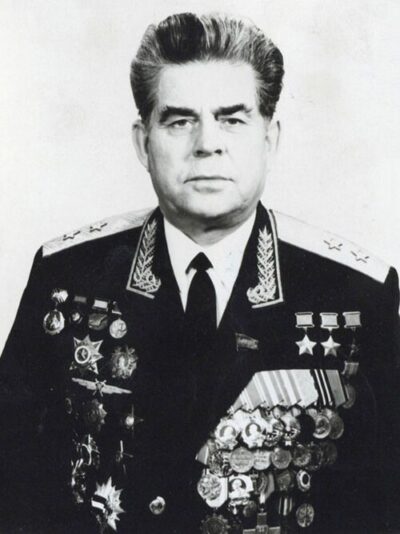
Georgy Beregovoy
Georgy Beregovoy was a Soviet cosmonaut. Born April 15, 1921, in Fedorivka. Died June 30, 1995, in Moscow. Positions held include deputy of the Supreme Soviet of the Soviet Union (1974–1989). Educated at Gagarin Air Force Academy. Awards include Hero of the Soviet Union (2 times), Order of Lenin (2 times) and Order of the Red Banner (2 times).
Facts
39 facts · 2 confirmed by two sources · 22 cited · 15 from one source
Where this comes from
Papalocal keeps its own record. It started from these sources; what each one said is kept here as it was copied, so a change on their side never changes this page by itself. Tap one to read its version.
What Wikidata says · copied November 16, 2026 · revision 2567720079
- Described as
- Soviet cosmonaut (1921–1995)
- Other names
- Georgy Timofeyevich Beregovoy, Beregovoy, Береговой Георгий Тимофеевич, Береговой, Георгий, Береговой Георгий, Береговой, Г. Т., Береговой Г. Т., Георгий Тимофеевич Береговой, Георгий Береговой
- Born
- April 15, 1921 · 4 references
- Died
- June 30, 1995 · 2 references
- Born in
- Fedorivka
- Died in
- Moscow · 1 reference
- Buried in
- Novodevichy Cemetery · 1 reference
- Citizen of
- Soviet Union; Russia
- Occupation
- aircraft pilot; astronaut · 1 reference; politician; test pilot · 1 reference; military personnel; writer; air force pilot · 1 reference; soldier · 1 reference
- Positions held
- deputy of the Supreme Soviet of the Soviet Union (1974–1989)
- Political party
- Communist Party of the Soviet Union
- Education
- Gagarin Air Force Academy (–1956)
- Awards
- Hero of the Soviet Union (2 times) (1944, 1968) · 1 reference; Order of Lenin (2 times) (1944, 1968) · 1 reference; Order of the Red Banner (2 times) (1942, 1943) · 1 reference; Order of Bogdan Khmelnitsky, 3rd class (1944) · 1 reference; Order of Alexander Nevsky (1943) · 1 reference; Order of the Patriotic War, 1st class (2 times) (1945, 1985) · 1 reference; Order of the Red Star (2 times) (1954, 1955) · 1 reference; Order "For Service to the Homeland in the Armed Forces of the USSR", 3rd class (1975) · 1 reference; Medal "For Battle Merit" (1949) · 1 reference; Jubilee Medal "In Commemoration of the 100th Anniversary of the Birth of Vladimir Ilyich Lenin" (1970) · 1 reference; Medal "For the Victory over Germany in the Great Patriotic War 1941–1945" (1945) · 1 reference; Jubilee Medal "Twenty Years of Victory in the Great Patriotic War 1941–1945" (1965) · 1 reference; Jubilee Medal "Thirty Years of Victory in the Great Patriotic War 1941–1945" (1975) · 1 reference; Jubilee Medal "Forty Years of Victory in the Great Patriotic War 1941–1945" (1985) · 1 reference; Jubilee Medal "50 Years of Victory in the Great Patriotic War 1941–1945"
- Field
- aerial warfare · 1 reference; astronautics · 1 reference
- Military branch
- Soviet Air Forces
- Military rank
- Sergeant (1941–); lieutenant (1943–); senior lieutenant (1943–)
- Wikipedias with a page
- 42
Wikidata item Q364451 (wikidata.org/wiki/Q364451), public domain (CC0). Copied November 16, 2026.
What Wikipedia says · copied November 16, 2026 · revision 1378499216
Georgy Timofeyevich Beregovoy (Russian: Георгий Тимофеевич Береговой, Ukrainian: Георгій Тимофійович Береговий, romanized: Heorhiy Tymofiyovych Berehovyi; 15 April 1921 – 30 June 1995) was a Soviet cosmonaut who commanded the space mission Soyuz 3 in 1968. From 1972 to 1987, he headed the Yuri Gagarin Cosmonaut Training Center.
At the time of his space flight, Beregovoy was 47 years of age: he was the earliest-born human to go to orbit, being born three months and three days earlier than the second earliest-born man in orbit – John Glenn, but later than X-15 pilot Joe Walker who made 2 (or 3, according to USAF definition) suborbital space flights.
- Born, in its opening lines
- April 15, 1921
- Died, in its opening lines
- June 30, 1995
From the Wikipedia article “Georgy Beregovoy” (en.wikipedia.org/wiki/Georgy_Beregovoy), by its contributors, under CC BY-SA 4.0 (creativecommons.org/licenses/by-sa/4.0/). Copied November 16, 2026; not changed.
Confirmed Two sources agree. Cited One source, and it names where it got it. One source One source, without a reference of its own. Sources disagree The sources disagree. We show the best-supported value and keep theirs below.
