
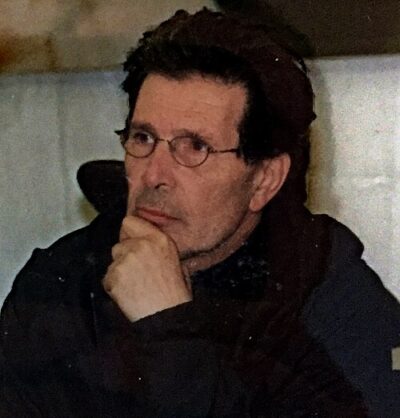
Gianni Celati
Gianni Celati was an Italian writer. Born January 10, 1937, in Sondrio. Died January 3, 2022, in Brighton. Awards include Viareggio Prize, Bagutta Prize and Napoli Prize.
Facts
28 facts · 2 confirmed by two sources · 9 cited · 17 from one source
Where this comes from
Papalocal keeps its own record. It started from these sources; what each one said is kept here as it was copied, so a change on their side never changes this page by itself. Tap one to read its version.
What Wikidata says · copied November 18, 2026 · revision 2568789591
- Described as
- Italian writer (1937–2022)
- Other names
- Giovanni Celati
- Born
- January 10, 1937 · 3 references
- Died
- January 3, 2022 · 2 references
- Born in
- Sondrio · 1 reference
- Died in
- Brighton · 2 references
- Citizen of
- Italy; Kingdom of Italy (–1946)
- Occupation
- writer · 1 reference; translator · 1 reference; university teacher; literary critic; painter; sculptor; documentary filmmaker · 1 reference; teacher · 1 reference
- Worked for
- University of Bologna
- Awards
- Viareggio Prize (2006); Bagutta Prize (1974); Napoli Prize (2005); Premio Selezione Campiello; Premio Chiara; Grinzane Cavour Prize; Mondello Prize; Premio Feronia-Città di Fiano; Flaiano Literary Prize; Premio Bergamo
- Field
- creative and professional writing · 1 reference; literary criticism · 1 reference; translation from English · 1 reference
- Wikipedias with a page
- 20
Wikidata item Q1364144 (wikidata.org/wiki/Q1364144), public domain (CC0). Copied November 18, 2026.
What Wikipedia says · copied November 18, 2026 · revision 1371177594
Gianni Celati (10 January 1937 – 3 January 2022) was an Italian writer, translator, and literary critic.
- Born, in its opening lines
- January 10, 1937
- Died, in its opening lines
- January 3, 2022
From the Wikipedia article “Gianni Celati” (en.wikipedia.org/wiki/Gianni_Celati), by its contributors, under CC BY-SA 4.0 (creativecommons.org/licenses/by-sa/4.0/). Copied November 18, 2026; not changed.
Confirmed Two sources agree. Cited One source, and it names where it got it. One source One source, without a reference of its own. Sources disagree The sources disagree. We show the best-supported value and keep theirs below.
