
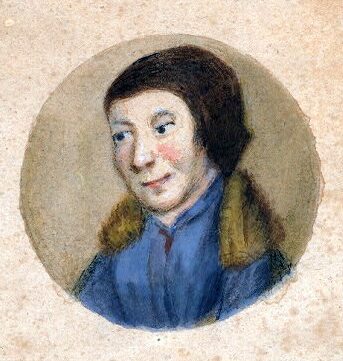
Gilles Binchois
Gilles Binchois was a Franco-Flemish Renaissance composer (c. 1400–1460). Born 1400, in Mons. Died September 20, 1460, in Soignies. Positions held include chaplain. Known for Lyrical poems, Masses and Ballades.
Facts
14 facts · 2 confirmed by two sources · 3 cited · 9 from one source
Where this comes from
Papalocal keeps its own record. It started from these sources; what each one said is kept here as it was copied, so a change on their side never changes this page by itself. Tap one to read its version.
What Wikidata says · copied November 16, 2026 · revision 2557896229
- Described as
- Franco-Flemish Renaissance composer (c. 1400–1460)
- Other names
- Gilles de Bins, Binchois
- Born
- 1400 · 5 references
- Died
- September 20, 1460 · 7 references
- Born in
- Mons
- Died in
- Soignies · 1 reference
- Citizen of
- Kingdom of France · 1 reference
- Occupation
- composer · 2 references; writer; poet · 1 reference; singer · 1 reference
- Positions held
- chaplain
- Instrument
- organ
- Known for
- Lyrical poems; Masses; Ballades
- Wikipedias with a page
- 38
Wikidata item Q214964 (wikidata.org/wiki/Q214964), public domain (CC0). Copied November 16, 2026.
What Wikipedia says · copied November 16, 2026 · revision 1383852308
Gilles de Bins dit Binchois (also Binchoys; c. 1400 – 20 September 1460) was a Franco-Flemish composer and singer of early Renaissance music. A central figure of the Burgundian School, Binchois is a renowned melodist and miniaturist; he generally avoided large scale works, and is most admired for his shorter secular chansons. Contemporary musicologists generally rank his importance below his colleague Guillaume Du Fay and the English composer John Dunstaple, but together the three were the most celebrated composers of the early European Renaissance.
Binchois was born in Mons (modern-day Belgium) to an upper-class family from Binche. His youth is largely unknown, although early chorister training is likely; by late 1419 he had obtained a local organist post. By 1423 he was in Lille and probably a soldier under the Englishman William de la Pole, eventually in Paris and Hainaut. Sometime during the 1420s, Binchois settled in the culturally thriving court of Burgundy under Philip the Good, where he became a subdeacon and was awarded numerous prebends. He retired to Soignies in 1453 amid a substantial courtly pension, dying in 1460.
It is thought that considerably more of his sacred music survives than secular music, creating a "paradoxical image" of the composer. Reflecting on his style, the Encyclopædia Britannica comments that "Binchois cultivated the gently subtle rhythm, the suavely graceful melody, and the smooth treatment of dissonance of his English contemporaries".
- Born, in its opening lines
- c. 1400
- Died, in its opening lines
- September 20, 1460
From the Wikipedia article “Gilles Binchois” (en.wikipedia.org/wiki/Gilles_Binchois), by its contributors, under CC BY-SA 4.0 (creativecommons.org/licenses/by-sa/4.0/). Copied November 16, 2026; not changed.
Confirmed Two sources agree. Cited One source, and it names where it got it. One source One source, without a reference of its own. Sources disagree The sources disagree. We show the best-supported value and keep theirs below.
