
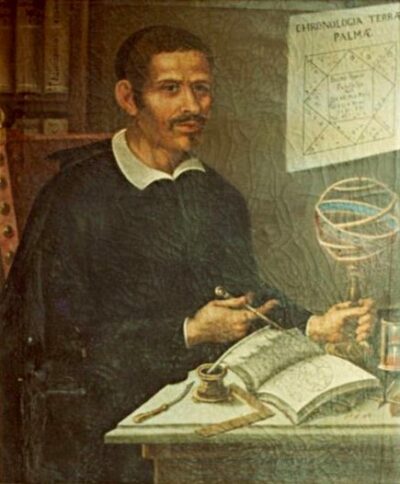
Giovan Battista Hodierna
Giovan Battista Hodierna was an Italian astronomer. Born April 13, 1597, in Ragusa. Died April 6, 1660, in Palma di Montechiaro. Known for De systemate orbis cometici, deque admirandis coeli characteribus.
Facts
12 facts · 2 confirmed by two sources · 7 cited · 3 from one source
Where this comes from
Papalocal keeps its own record. It started from these sources; what each one said is kept here as it was copied, so a change on their side never changes this page by itself. Tap one to read its version.
What Wikidata says · copied November 16, 2026 · revision 2545009993
- Described as
- Italian astronomer
- Other names
- Giovanni Battista Hodierna, Gioanbatista Odierna, Giovanni Hodierna
- Born
- April 13, 1597 · 2 references
- Died
- April 6, 1660 · 2 references
- Born in
- Ragusa · 1 reference
- Died in
- Palma di Montechiaro · 1 reference
- Citizen of
- Kingdom of Sicily
- Occupation
- entomologist · 1 reference; astronomer · 2 references; architect; Catholic priest · 1 reference
- Known for
- De systemate orbis cometici, deque admirandis coeli characteribus · 1 reference
- Field
- astronomy · 1 reference
- Religion
- Catholic Church
- Wikipedias with a page
- 30
Wikidata item Q55007799 (wikidata.org/wiki/Q55007799), public domain (CC0). Copied November 16, 2026.
What Wikipedia says · copied November 16, 2026 · revision 1381815970
Giovanni Battista Hodierna, also spelled as Odierna (13 April 1597 – 6 April 1660) was an Italian astronomer at the court of Giulio Tomasi, Duke of Palma (Palma di Montechiaro). He compiled a catalogue of comets and other celestial objects containing some 40 entries, including at least 19 real and verifiable nebulous objects that might be confused with comets.
- Born, in its opening lines
- April 13, 1597
- Died, in its opening lines
- April 6, 1660
From the Wikipedia article “Giovanni Battista Hodierna” (en.wikipedia.org/wiki/Giovanni_Battista_Hodierna), by its contributors, under CC BY-SA 4.0 (creativecommons.org/licenses/by-sa/4.0/). Copied November 16, 2026; not changed.
Confirmed Two sources agree. Cited One source, and it names where it got it. One source One source, without a reference of its own. Sources disagree The sources disagree. We show the best-supported value and keep theirs below.
