
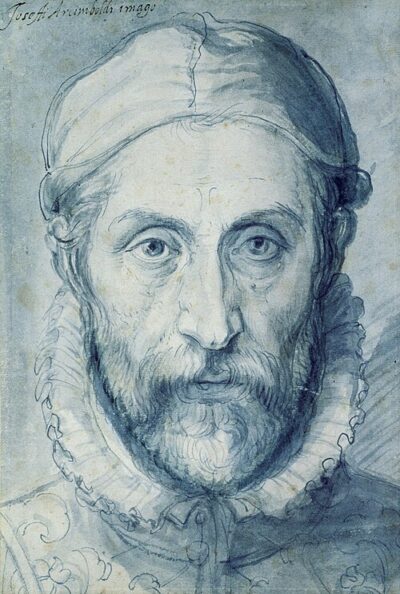
Giuseppe Arcimboldo
Giuseppe Arcimboldo was an Italian painter of the late Renaissance. Born 1527, in Milan. Died July 11, 1593, in Milan. Positions held include court painter (1564–). Known for The Jurist, The Four Seasons and Rudolf II as Vertumnus.
Facts
31 facts · 2 confirmed by two sources · 16 cited · 13 from one source
Where this comes from
Papalocal keeps its own record. It started from these sources; what each one said is kept here as it was copied, so a change on their side never changes this page by itself. Tap one to read its version.
What Wikidata says · copied November 16, 2026 · revision 2569072811
- Described as
- Italian painter of the late Renaissance (1527–1593)
- Other names
- Giuseppe Arcimboldi, Josephus Arcimboldus, Giuseppe Archimboldo, Arcimboldo, Guiseppe Archimboldi, Arcimboldi, Archimboldo, Arcimlardo, giuseppe arcimboldo
- Born
- 1527 · 2 references
- Died
- July 11, 1593 · 7 references
- Born in
- Milan · 4 references
- Died in
- Milan · 4 references
- Citizen of
- Duchy of Milan
- Occupation
- painter · 2 references; architectural drafter · 2 references; carpets designer · 1 reference; designer · 1 reference; draftsperson · 1 reference; court painter · 1 reference; engineer · 1 reference; fresco painter · 1 reference
- Positions held
- court painter (1564–)
- Worked for
- Ferdinand I, Holy Roman Emperor (1562–)
- Genre
- still life · 1 reference; portrait painting · 1 reference; allegory · 1 reference; animal painting · 1 reference; figure · 1 reference; religious art · 1 reference
- Known for
- The Jurist; The Four Seasons; Rudolf II as Vertumnus; Portraits of the Archduchesses; The Spring · 1 reference
- Field
- painting · 1 reference
- Lived in
- Spain (1570–); Luxembourg (1562–); Madrid (1587–); Milan (1527–1562)
- Wikipedias with a page
- 66
Wikidata item Q7751 (wikidata.org/wiki/Q7751), public domain (CC0). Copied November 16, 2026.
What Wikipedia says · copied November 16, 2026 · revision 1384751294
Giuseppe Arcimboldo, also spelled Arcimboldi (Italian: [dʒuˈzɛppe artʃimˈbɔldo]; 5 April 1527 – 11 July 1593), was an Italian Mannerist painter best known for creating imaginative portraits in the shapes of human heads, though composed entirely of objects such as fruits, vegetables, flowers, fish and books.
These works form a category distinct from his other artwork. He was a conventional court painter of portraits for three Holy Roman Emperors in Vienna and Prague, as well as religious subjects and a series of coloured drawings of exotic animals in the imperial menagerie, among other things. He specialized in grotesque symbolical compositions of fruits, animals, landscapes, or various inanimate objects arranged into human forms.
The odd still life portraits were clearly partly intended as curiosities to amuse the court; critics, however, have speculated as to how seriously they were associated with Renaissance Neo-Platonism or other intellectual currents of the day.
- Born, in its opening lines
- April 5, 1527
- Died, in its opening lines
- July 11, 1593
From the Wikipedia article “Giuseppe Arcimboldo” (en.wikipedia.org/wiki/Giuseppe_Arcimboldo), by its contributors, under CC BY-SA 4.0 (creativecommons.org/licenses/by-sa/4.0/). Copied November 16, 2026; not changed.
Confirmed Two sources agree. Cited One source, and it names where it got it. One source One source, without a reference of its own. Sources disagree The sources disagree. We show the best-supported value and keep theirs below.
