
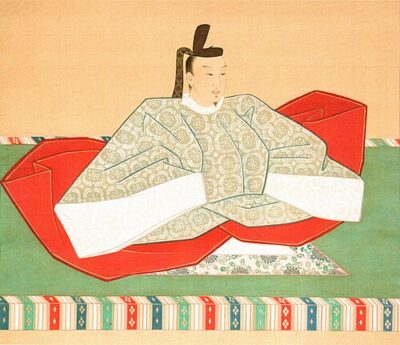
Go-Komatsu was an emperor of Japan. Born August 1, 1377. Died December 1, 1433, in Kyoto. Positions held include pretender (1382–1392) and Emperor of Japan (1392–1412).
Facts
15 facts · 2 confirmed by two sources · 0 cited · 13 from one source
Where this comes from
Papalocal keeps its own record. It started from these sources; what each one said is kept here as it was copied, so a change on their side never changes this page by itself. Tap one to read its version.
What Wikidata says · copied November 16, 2026 · revision 2569087312
- Described as
- emperor of Japan
- Other names
- Emperor Go-Komatsu, Go-Komatsu-tennō
- Born
- August 1, 1377
- Died
- December 1, 1433
- Died in
- Kyoto
- Buried in
- Fukakusa no Kita no Misasagi
- Citizen of
- Japan
- Occupation
- sovereign
- Positions held
- pretender (1382–1392); Emperor of Japan (1392–1412)
- Spouse
- Hinonishi Motoko; Kanroji Tsuneko
- Children
- Shōkō; Ikkyū Sōjun; Ogawa no miya
- Father
- Go-En'yū
- Mother
- Tsūyōmonin no Itsuko
- Wikipedias with a page
- 32
Wikidata item Q123052 (wikidata.org/wiki/Q123052), public domain (CC0). Copied November 16, 2026.
What Wikipedia says · copied November 16, 2026 · revision 1385819506
Emperor Go-Komatsu (後小松天皇, Go-Komatsu-tennō; 1 August 1377 – 1 December 1433) was the 100th emperor of Japan, according to the traditional order of succession, and the sixth and final Emperor of the Northern Court.
He is officially considered to have been the Northern pretender from 24 May 1382 to 21 October 1392, when upon Emperor Go-Kameyama's abdication, Go-Komatsu is understood to have been a legitimate emperor (the 100th sovereign) from that date. In 1392, following the post-Nanboku-chō unification of the two formerly contending courts, the Southern Emperor Emperor Go-Kameyama reached an agreement with Go-Komatsu to alternate control of the throne between the Northern and Southern courts on a ten-year plan which effectively signaled the end of the southern court's claims to sovereignty. However, Go-Komatsu reneged, not only ruling for 20 years until his own abdication on 5 October 1412, but was succeeded by his own son, rather than by one from the former Southern Court. According to pre-Meiji scholars, Go-Komatsu's reign as a legitimate emperor spanned the years from 1392 through 1412. The present Japanese Imperial Family is descended from the
three Northern Court emperors.
This Nanboku-chō "sovereign" was named after the 9th-century Emperor Kōkō, and go- (後), translates literally as "later." Jien's Gukanshō explains that Kōkō was called "the Emperor of Komatsu". The 14th-century pretender and emperor may be called the "later Emperor Kōkō" or the "later Emperor Komatsu". The Japanese word go has also been translated to mean the "second one;" and in some older sources, this would-be emperor may be identified as "Komatsu, the second", or as "Komatsu II."
- Born, in its opening lines
- August 1, 1377
- Died, in its opening lines
- December 1, 1433
From the Wikipedia article “Emperor Go-Komatsu” (en.wikipedia.org/wiki/Emperor_Go-Komatsu), by its contributors, under CC BY-SA 4.0 (creativecommons.org/licenses/by-sa/4.0/). Copied November 16, 2026; not changed.
Confirmed Two sources agree. Cited One source, and it names where it got it. One source One source, without a reference of its own. Sources disagree The sources disagree. We show the best-supported value and keep theirs below.
