
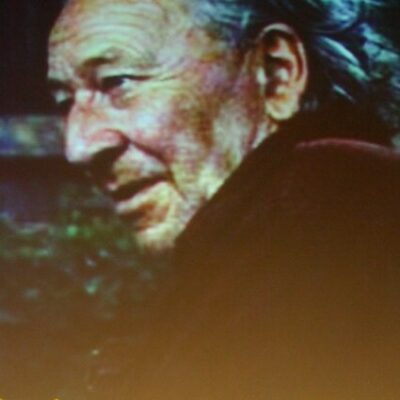
Gregory Bateson
Gregory Bateson was an English anthropologist, linguist, semiotician and cyberneticist. Born May 9, 1904, in Grantchester. Died July 4, 1980, in San Francisco. Educated at Charterhouse School and St John's College. Awards include Guggenheim Fellowship, California Hall of Fame and Fellow of the American Academy of Arts and Sciences.
Facts
34 facts · 2 confirmed by two sources · 18 cited · 14 from one source
Where this comes from
Papalocal keeps its own record. It started from these sources; what each one said is kept here as it was copied, so a change on their side never changes this page by itself. Tap one to read its version.
What Wikidata says · copied November 13, 2026 · revision 2565538022
- Described as
- English anthropologist, linguist, semiotician and cyberneticist (1904–1980)
- Born
- May 9, 1904 · 9 references
- Died
- July 4, 1980 · 6 references
- Born in
- Grantchester · 1 reference
- Died in
- San Francisco · 1 reference
- Citizen of
- United Kingdom; United States
- Occupation
- anthropologist · 2 references; philosopher · 1 reference; sociologist; linguist · 1 reference; biologist · 2 references; film director; psychologist · 1 reference; semiotician · 1 reference
- Worked for
- University of California, Santa Cruz
- Education
- Charterhouse School; St John's College
- Member of
- American Academy of Arts and Sciences; Mead & Bateson
- Awards
- Guggenheim Fellowship (1946) · 1 reference; California Hall of Fame (2012); Fellow of the American Academy of Arts and Sciences
- Field
- anthropology · 1 reference; cybernetics · 1 reference; ethnology · 1 reference; ecology · 1 reference; literary activity · 1 reference; systems theory · 1 reference
- Spouse
- Margaret Mead (1936–1950) · 1 reference
- Children
- Mary Catherine Bateson · 1 reference; Nora Bateson
- Father
- William Bateson
- Mother
- Beatrice Bateson · 1 reference
- Religion
- atheism
- Wikipedias with a page
- 46
Wikidata item Q314252 (wikidata.org/wiki/Q314252), public domain (CC0). Copied November 13, 2026.
What Wikipedia says · copied November 13, 2026 · revision 1383144236
Gregory Bateson (9 May 1904 – 4 July 1980) was an English anthropologist, social scientist, linguist, visual anthropologist, semiotician, and cyberneticist whose work intersected that of many other fields. His writings include Steps to an Ecology of Mind (1972) and Mind and Nature (1979).
In Palo Alto, California, Bateson and his colleagues developed the double-bind theory of schizophrenia.
Bateson's interest in systems theory forms a thread running through his work. He was one of the original members of the core group of the Macy conferences in Cybernetics (1941–1960), and the later set on Group Processes (1954–1960), where he represented the social and behavioral sciences. He was interested in the relationship of these fields to epistemology. His association with the editor and author Stewart Brand helped widen his influence.
- Born, in its opening lines
- May 9, 1904
- Died, in its opening lines
- July 4, 1980
From the Wikipedia article “Gregory Bateson” (en.wikipedia.org/wiki/Gregory_Bateson), by its contributors, under CC BY-SA 4.0 (creativecommons.org/licenses/by-sa/4.0/). Copied November 13, 2026; not changed.
Confirmed Two sources agree. Cited One source, and it names where it got it. One source One source, without a reference of its own. Sources disagree The sources disagree. We show the best-supported value and keep theirs below.
