
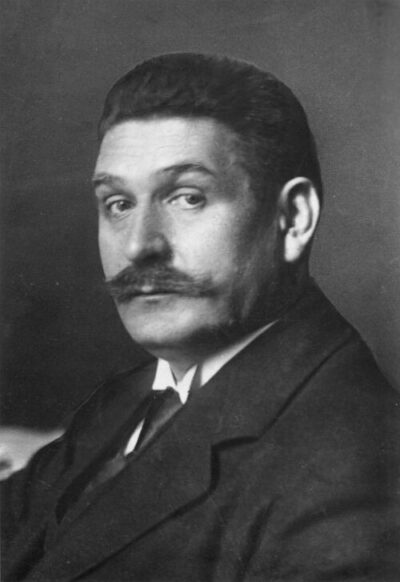
Gustav Bauer
Gustav Bauer was a German trade unionist and chancellor. Born January 6, 1870, in Ozyorsk. Died September 16, 1944, in Hermsdorf. Positions held include member of the Reichstag of the Weimar Republic, member of the Reichstag of the German Empire and Reich Chancellor in the Weimar Republic (1919–1920).
Facts
18 facts · 2 confirmed by two sources · 4 cited · 12 from one source
What’s different
- Died: we show September 16, 1944 (Confirmed). Wikidata also lists September 6, 1944
Where this comes from
Papalocal keeps its own record. It started from these sources; what each one said is kept here as it was copied, so a change on their side never changes this page by itself. Tap one to read its version.
What Wikidata says · copied November 16, 2026 · revision 2569004029
- Described as
- German trade unionist and chancellor (1870–1944)
- Other names
- Gustav Adolf Bauer
- Born
- January 6, 1870 · 5 references
- Died
- September 16, 1944 · 1 reference; September 6, 1944 · 1 reference
- Born in
- Ozyorsk · 1 reference
- Died in
- Hermsdorf · 1 reference
- Buried in
- Oberhavel District
- Name at birth
- Gustav Adolf Bauer
- Citizen of
- Kingdom of Prussia; Germany
- Occupation
- politician · 1 reference; trade unionist · 1 reference
- Positions held
- member of the Reichstag of the Weimar Republic; member of the Reichstag of the German Empire; Reich Chancellor in the Weimar Republic (1919–1920); Chancellor of Germany (1919–1920); minister of labor; vice president (1908–1918)
- Political party
- Social Democratic Party of Germany
- Religion
- irreligion
- Wikipedias with a page
- 51
Wikidata item Q57159 (wikidata.org/wiki/Q57159), public domain (CC0). Copied November 16, 2026.
What Wikipedia says · copied November 16, 2026 · revision 1360388913
Gustav Adolf Bauer (; 6 January 1870 – 16 September 1944) was a German Social Democratic Party leader and the chancellor of Germany from June 1919 to March 1920. Prior to that, he was minister of labour in the last cabinet of the German Empire and during most of the German Revolution that preceded the formal establishment of the Weimar Republic.
Bauer became minister president of the Weimar National Assembly in June 1919 after Philipp Scheidemann resigned in protest against the Treaty of Versailles. Following the adoption of the Weimar Constitution in August 1919, Bauer's title formally changed to "chancellor". During his term of office, a crucial tax restructuring was enacted, as were a series of important social reforms that affected unemployment relief, maternity benefits and health and old age insurance.
After his cabinet fell in March 1920 as a result of its response to the Kapp Putsch, Bauer served as vice-chancellor, minister of the treasury, and minister of transportation in other cabinets from May 1920 to November 1922. In 1925, he was forced to resign his seat in the Reichstag due to his involvement in the fraud and bribery of the Barmat scandal. He was allowed to resume his seat in 1926. He kept it until 1928, when he retired from public life.
- Born, in its opening lines
- January 6, 1870
- Died, in its opening lines
- September 16, 1944
From the Wikipedia article “Gustav Bauer” (en.wikipedia.org/wiki/Gustav_Bauer), by its contributors, under CC BY-SA 4.0 (creativecommons.org/licenses/by-sa/4.0/). Copied November 16, 2026; not changed.
Confirmed Two sources agree. Cited One source, and it names where it got it. One source One source, without a reference of its own. Sources disagree The sources disagree. We show the best-supported value and keep theirs below.
